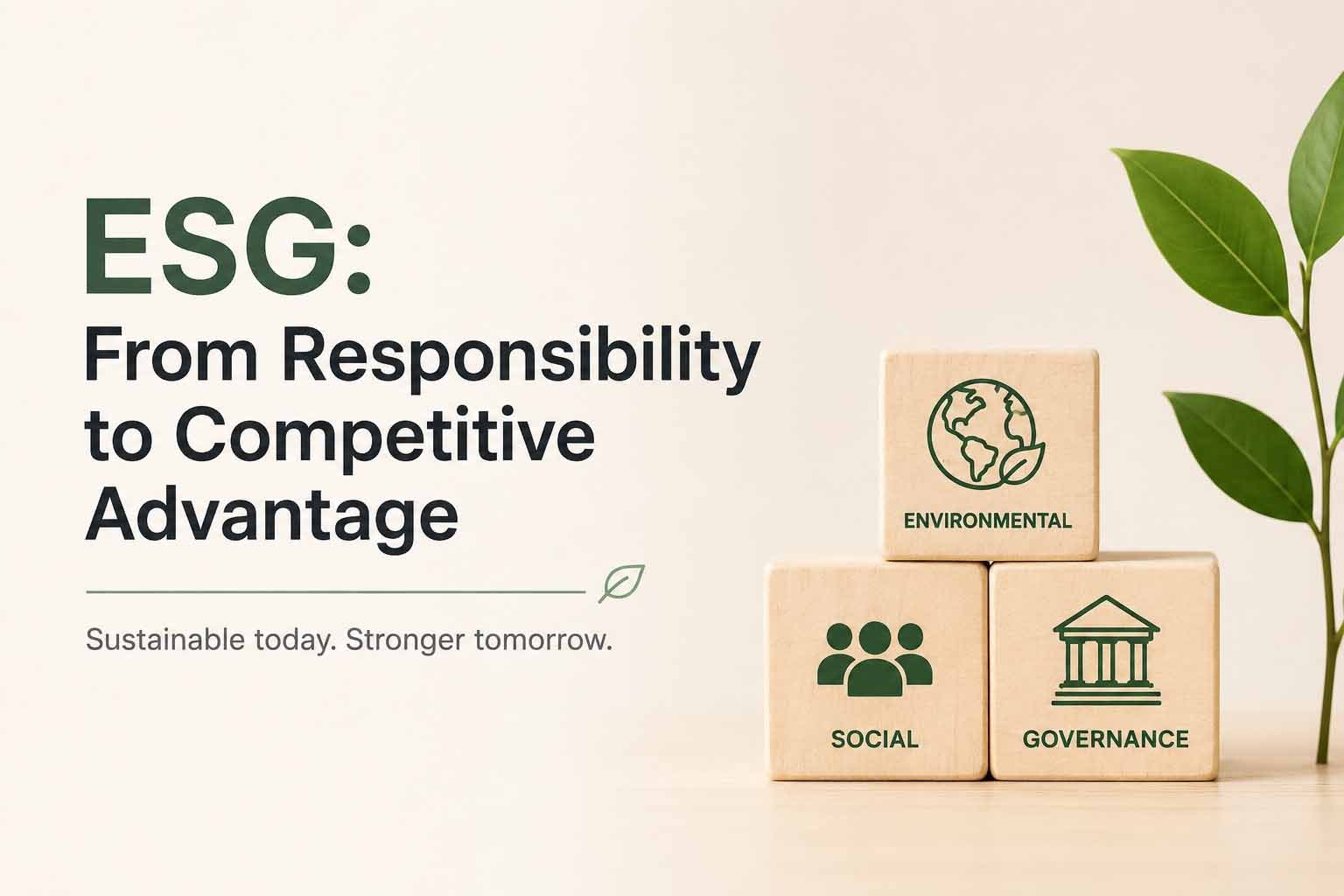

The New Competitive Advantage: Corporate Decarbonisation Strategies That Define Responsible Enterprises

Corporate climate commitments are no longer optional—they are essential for survival and success. For leading organisations, a clearly defined corporate decarbonisation strategy is rapidly becoming the foundation of long-term competitiveness and climate-aligned business strategy. Global temperatures continue to rise, with businesses facing mounting pressure from all sides: investors demanding robust ESG performance to mitigate financial risks, regulators enforcing stricter disclosure and emission reduction mandates (such as the EU's Green Deal targets for 55% cuts by 2030 and emerging rules in regions like California starting in 2026), and customers increasingly favoring sustainable brands. Over 10,000 companies worldwide have now set science-based targets validated by the Science Based Targets initiative (SBTi), reflecting a shift where net-zero pledges by 2050 cover trillions in revenue among major global firms.
This evolution marks a pivotal change: Corporate decarbonisation has transitioned from peripheral CSR initiatives to a core.
For many enterprises, decarbonisation now defines their broader corporate climate strategy and net-zero business strategy. Corporate decarbonisation has transitioned from peripheral CSR initiatives to a core business strategy. Leading enterprises recognize that reducing emissions—across direct operations (Scope 1 and 2) and value chains (Scope 3)—drives efficiency, innovation, and resilience. Far from a cost burden, effective decarbonisation enhances profitability through lower energy expenses, supply chain optimization, and access to green markets.
Responsible enterprises are discovering that decarbonisation is not simply about reducing carbon footprints—it is about re-engineering how companies operate, invest, and innovate. The companies leading this transformation are treating decarbonisation not as a compliance exercise, but as a strategic lever for resilience, efficiency, and market leadership.
Why Corporate Decarbonisation Strategy Is Now a Strategic Imperative
Escalating climate risks… transformed emissions reduction into a core driver of long-term viability and competitiveness and an essential element of modern climate risk management for global enterprises. Decarbonisation is no longer a voluntary aspiration but an unavoidable strategic imperative for businesses in 2026. Escalating climate risks, combined with intensifying stakeholder demands, have transformed emissions reduction from an environmental concern into a core driver of long-term viability and competitiveness.
Regulatory Pressure remains the most forceful driver. Major economies enforce stringent carbon reporting and net-zero frameworks: the EU's Corporate Sustainability Reporting Directive (CSRD) and Corporate Sustainability Due Diligence Directive (CSDDD) expand mandatory disclosures, while the Carbon Border Adjustment Mechanism (CBAM) entered its definitive phase on 1 January 2026, imposing carbon pricing on imports of high-emission goods like steel, cement, and fertilisers (with payments due from 2027). Similar mandates emerge globally, including California's SB 253 and SB 261 requiring Scope 1–3 emissions and climate risk reporting for large companies starting in 2026, alongside ISSB-aligned rules in Asia-Pacific hubs like China, Hong Kong, Singapore, and Japan.
Investor Expectations further amplify urgency. ESG performance now directly influences capital allocation, with institutional investors prioritizing financially material climate data. Even amid policy shifts in some regions, 77–85% of global investors focus on sustainability-linked value creation, demanding robust disclosures to mitigate risks and unlock premium valuations.
Market & Consumer Pressure completes the triad. Customers increasingly favor brands with verifiable sustainable supply chains, scrutinizing Scope 3 emissions and environmental credibility. Procurement decisions and brand loyalty hinge on genuine decarbonisation progress.
Companies delaying action face severe consequences: regulatory penalties, reputational damage, restricted investment access, higher operational costs from carbon taxes, and lost market share. In contrast, proactive decarbonisation fosters efficiency, innovation, and resilience.
The shift toward decarbonisation is now shaping how organisations compete globally, turning climate action into a defining factor for enduring success.
From Climate Pledges to Operational Reality
While over 10,000 companies worldwide have now secured validated science-based targets through the Science Based Targets initiative (SBTi) as of early 2026—representing more than 40% of global market capitalization—many pledges remain disconnected from tangible operational change. This credibility gap persists: ambitious net-zero announcements by 2050 often lack corresponding near-term progress, with reports highlighting slower-than-expected reductions, delayed timelines, watered-down interim goals, and over-reliance on offsets or Scope 3 exclusions in sectors like tech, finance, and consumer goods.
True corporate decarbonisation strategies demand more than public declarations. They require rigorous carbon measurement across all scopes—Scope 1 (direct emissions), Scope 2 (purchased energy), and especially Scope 3 (value chain, often 70–90% of total footprint)—using standardized methodologies like the GHG Protocol. These must integrate deeply into core operational planning, supported increasingly by carbon intelligence platforms and digital ESG data systems that enable real-time emissions visibility. Leadership accountability is essential ensuring that corporate decarbonisation strategies move beyond reporting narratives into measurable operational transformation.
The difference is stark: symbolic commitments emphasize vague "ambitions" or "journeys" in sustainability reports, often prioritizing PR over transformation. In contrast, measurable emission reductions deliver absolute cuts through concrete actions, such as process electrification, fuel switching, or supplier engagement.
In manufacturing and energy-intensive industries like steel and cement, leaders are scaling hydrogen-based reduction and carbon capture. Logistics advances via electrification and modal shifts to rail or sea. Aviation and shipping progress with sustainable fuels (SAF and green methanol) and efficiency gains, though scaling remains gradual amid regulatory pushes like ReFuelEU and IMO frameworks.
Decarbonisation succeeds when it becomes embedded into operational decision-making, not confined to sustainability reports—turning climate action into a driver of genuine competitiveness and resilience.
Technology Enabling Corporate Decarbonisation
Technology is the cornerstone enabling organisations to translate decarbonisation ambitions into scalable, verifiable action. In 2026, advancements in digital tools empower companies to achieve precise, data-driven emissions reductions while enhancing efficiency and resilience.
Digital Carbon Tracking provides the foundation through real-time emissions monitoring and integrated ESG data platforms. Modern carbon accounting software forming the backbone of emerging carbon intelligence platforms that enable real-time emissions monitoring—such as those aligned with the GHG Protocol and compliant with CSRD or California mandates—automates Scope 1, 2, and 3 data collection, replacing manual estimates with granular, auditable insights. This shift delivers accurate footprints, supports regulatory reporting, and identifies high-impact reduction opportunities.
Artificial Intelligence & Predictive Analytics unlock optimisation at scale. AI algorithms analyse vast datasets accelerating the shift toward low-carbon business models through operational optimisation for energy optimisation, forecasting demand to minimise waste, and modelling supply chain emissions to guide supplier engagement and logistics rerouting. Predictive tools enable proactive interventions, such as dynamic energy management or emissions forecasting, often yielding 20–40% efficiency gains in operations.
Digital Twins revolutionise simulation and decision-making. These virtual replicas of physical assets, processes, or infrastructure—powered by real-time sensor data and increasingly integrated with AI—allow testing of upgrades like electrification or renewable integration without real-world risks. In manufacturing, energy, and buildings, digital twins optimise operations, predict maintenance, and simulate decarbonisation scenarios, driving substantial CO₂ cuts through enhanced efficiency.
Renewable Energy Integration benefits from smart grid systems and energy storage optimisation. AI-driven platforms balance variable renewables, manage storage for peak shaving, and stabilise grids, accelerating the transition to low-carbon power sources.
Strategic insight: Technology allows organisations to move from estimated sustainability metrics to real-time carbon intelligence, embedding decarbonisation into daily operations. Data-driven sustainability transforms decarbonisation into a manageable operational system rather than an abstract goal—positioning tech-savvy enterprises as leaders in the low-carbon economy.
Decarbonising Global Supply Chains : The Hidden Frontier
Supply chains represent the hidden yet dominant frontier in corporate decarbonisation. For most organisations, Scope 3 emissions—represent the majority of their carbon footprint making decarbonising supply chains one of the most complex challenges in corporate climate strategy.. Recent data from sources like the World Resources Institute, CDP, and industry analyses indicate that Scope 3 typically comprises 70–90% of overall emissions, often averaging around 75% across sectors, with some industries approaching 90–95% or even higher in cases like technology and consumer goods.
This outsized impact stems from key issues embedded in global operations:
- Supplier manufacturing emissions, where energy-intensive production of purchased goods and services generates substantial indirect CO₂.
- Transportation logistics, including upstream and downstream freight reliant on fossil fuels.
- Material sourcing, from raw extraction to processing, often involving deforestation, mining, or high-emission agriculture.
- Product lifecycle impact, encompassing use-phase emissions and end-of-life disposal.
Responsible enterprises are addressing this through proactive solutions. They forge supplier decarbonisation partnerships, collaborating on shared targets, renewable energy transitions, and efficiency upgrades. Sustainable procurement policies prioritize low-carbon suppliers via scoring, audits, and contractual requirements. Logistics optimisation involves modal shifts (e.g., rail over road), route efficiency, and electrification. Low-carbon material innovation drives adoption of recycled, bio-based, or alternative inputs.
Strategic insight: True decarbonisation requires companies to extend sustainability expectations beyond their own operations, treating suppliers as extensions of their value chain. By tackling Scope 3 head-on, forward-thinking organisations mitigate risks, unlock efficiencies, and secure competitive advantage in a regulation-driven, stakeholder-demanding low-carbon economy.
Leadership, Governance and Accountability
Corporate decarbonisation strategies succeed only when anchored in strong leadership and robust governance. In 2026, executive-level ownership has become non-negotiable: CEOs and C-suite leaders must champion net-zero pathways, embedding decarbonisation within corporate climate strategy and enterprise risk management
Board oversight ensures strategic alignment and risk management. Many leading boards now include dedicated sustainability committees or integrate climate expertise, reviewing progress against science-based targets, regulatory compliance (e.g., CSRD, CBAM), and long-term resilience. Clear governance frameworks—such as dedicated decarbonisation policies, cross-functional steering groups, and transparent reporting structures—provide the operational backbone.
Performance-linked incentives drive accountability: increasingly, executive compensation ties 20–40% of variable pay to verifiable emissions reductions, renewable energy adoption, or Scope 3 engagement milestones. This shift moves sustainability from aspirational rhetoric to measurable outcomes.
Sustainability leadership is about aligning technology, people, and accountability. Critical leadership decisions include directing capital allocation toward green innovation (e.g., funding hydrogen pilots or electrification), redesigning operational processes for efficiency and low-carbon inputs, and embedding ESG deeply into corporate strategy—from product development to M&A due diligence.
Insight: Organisations that succeed treat sustainability as a strategic leadership function rather than a communications exercise. When boards and executives own decarbonisation with the same rigor as financial performance, it becomes a genuine source of competitive advantage, resilience, and stakeholder trust.
The Rise of the Chief Decarbonization Officer
A new title is appearing on organisational charts, and it signals how far decarbonisation has travelled from the sustainability report to the boardroom. Chief Decarbonization Officers and Chief Sustainability Officers are no longer symbolic hires; they are strategic operators tasked with embedding emissions reduction into capital planning, procurement, and product decisions. Industry data shows the share of major companies appointing dedicated sustainability leadership has risen sharply over the past decade, a trajectory that shows no sign of reversing as regulatory and investor scrutiny intensify.
This shift matters because it changes who owns the decarbonisation agenda. When emissions reduction reports through a dedicated executive with budget authority and board access, it stops competing for attention against quarterly priorities and becomes one of them. Companies that have created this role report faster progress translating targets into operational change — precisely the gap between "pledge" and "practice" that continues to separate credible decarbonisation strategies from symbolic ones.
Strategic insight: Organisations weighing whether decarbonisation deserves its own executive mandate should ask a simpler question: does emissions performance currently have the same organisational authority as financial performance? Where the answer is no, a dedicated leadership role is often the fastest way to close that gap.
How Decarbonisation Creates Competitive Advantage
Responsible enterprises are reaping tangible business benefits demonstrating that corporate decarbonisation strategies can generate measurable competitive advantage. These advantages extend far beyond compliance, creating measurable value across multiple dimensions.
Operational Efficiency stands out first: proactive emissions reduction drives lower energy costs through renewable sourcing, process optimisation, and waste minimisation—often yielding 10–30% savings in energy-intensive operations. Improved resource use, including circular economy practices and leaner supply chains, further enhances productivity and resilience against volatile commodity prices.
Investor Confidence surges as ESG performance becomes a key determinant of capital allocation particularly for organisations pursuing climate-aligned business strategies. In 2026, funds increasingly favour companies with validated science-based targets and transparent Scope 1–3 disclosures, resulting in lower cost of capital, higher valuations, and easier access to green financing instruments.
Brand Differentiation builds stronger consumer trust: customers reward brands demonstrating genuine climate leadership with greater loyalty, premium pricing power, and expanded market share in sustainability-conscious segments.
Regulatory Preparedness mitigates risks: early movers avoid penalties under expanding frameworks like CBAM, CSRD, and emerging global carbon pricing, while positioning themselves advantageously as regulations tighten.
Key message: Corporate decarbonisation strategies are increasingly becoming drivers of competitive advantage. Companies that act early gain technological, operational, and reputational leadership—turning climate action into a powerful source of enduring market strength.
Calculating the Return on Decarbonisation
For all the strategic language surrounding decarbonisation, boards ultimately ask a financial question: what does this return? The evidence increasingly answers it in concrete terms. Companies that treat decarbonisation as core business strategy — rather than a peripheral initiative — are converting emissions reductions into cost savings, revenue protection, and improved access to capital, often faster than their public commitments suggest.
The mechanics are straightforward. Energy efficiency and process optimisation lower operating costs directly. Reduced exposure to carbon pricing and border adjustment mechanisms protects margins as regulation tightens. And companies demonstrating verified emissions performance are increasingly rewarded with preferential financing terms, as lenders and institutional investors price climate risk into the cost of capital itself. Retailers and consumer brands that have moved early on supply chain decarbonisation report measurable gains in both efficiency and customer loyalty, evidence that the return is not confined to heavy industry.
Key message: Decarbonisation's financial case no longer rests on future risk avoidance alone. It rests on present, measurable value — in operating costs, in capital access, and in market position — which is precisely why treating it as a compliance exercise now represents the greater financial risk.
Frequently Asked Questions
What is a corporate decarbonisation strategy?
A corporate decarbonisation strategy is a structured business plan that helps organisations reduce greenhouse gas (GHG) emissions across their operations and value chains. It includes measuring Scope 1, Scope 2, and Scope 3 emissions, setting science-based emissions reduction targets, transitioning to renewable energy, improving operational efficiency, and embedding sustainability into business decision-making. A strong decarbonisation strategy supports long-term resilience, regulatory compliance, and competitive advantage.
Why is corporate decarbonisation important for businesses?
Decarbonisation has moved from environmental responsibility to commercial necessity for three converging reasons. Regulatory frameworks including the EU's CSRD, CBAM, and comparable disclosure mandates emerging across the US and Asia-Pacific are making emissions reporting a compliance requirement, not a voluntary gesture. Investors are pricing climate performance into capital allocation, meaning weak emissions data now translates directly into a higher cost of capital. And customers and business partners increasingly factor supply chain sustainability into purchasing and procurement decisions. Companies that treat decarbonisation as core strategy rather than a compliance afterthought tend to see the commercial upside first — in lower operating costs, stronger investor access, and reduced exposure to carbon pricing — while those that delay face the inverse: regulatory penalties, higher costs of capital, and eroding market access.
What are Scope 1, Scope 2, and Scope 3 emissions?
The three scopes describe where emissions originate relative to a company's direct control. Scope 1 covers direct emissions a company generates itself — fuel burned in owned vehicles or on-site combustion. Scope 2 covers indirect emissions from purchased energy, such as the electricity or heating a company buys rather than generates. Scope 3 covers everything else across the value chain: supplier manufacturing, transportation and logistics, business travel, and how customers use and eventually dispose of a product. The distinction matters strategically because Scope 3 is typically the largest and hardest category to control, often accounting for 70–90% of a company's total footprint, which is why credible decarbonisation strategies extend well beyond a company's own operations into supplier engagement and procurement policy.
How do you build a corporate decarbonisation strategy?
Building a credible corporate decarbonisation strategy starts with measurement, not targets. Organisations first establish a baseline across Scope 1, Scope 2, and Scope 3 emissions using standardised methodologies like the GHG Protocol, since setting reduction goals before understanding the full footprint tends to produce the vague "ambitions" that undermine credibility later. From there, the strategy typically moves through four stages: setting science-based targets validated against frameworks like the SBTi, embedding emissions data into operational and capital-allocation decisions rather than isolating it in sustainability reporting, securing executive and board-level ownership so the strategy carries the same authority as financial performance, and building supplier and value-chain engagement to address Scope 3, which for most companies represents the largest share of total emissions. The strategies that hold up under scrutiny are the ones built around measurable operational change from the outset, not retrofitted onto existing pledges.
How does decarbonisation create competitive advantage?
Decarbonisation creates competitive advantage across four connected dimensions rather than any single lever. Operationally, emissions reduction usually means energy efficiency, which lowers costs directly. Financially, companies with verified emissions performance and science-based targets are increasingly rewarded with better access to capital and stronger valuations, as institutional investors treat climate data as material financial information. Commercially, brands with credible sustainability records earn stronger customer loyalty and pricing power in markets where climate performance now factors into purchasing decisions. And strategically, early movers avoid the regulatory penalties and market restrictions that latecomers face as frameworks like CBAM and CSRD tighten. Together, these dimensions explain why decarbonisation has shifted from a cost center to a genuine source of enduring market advantage.
The Future of Responsible Enterprise
The global economy is entering an era where climate accountability defines corporate credibility and long-term viability. As net-zero transitions accelerate and stakeholders demand verifiable progress, organisations that integrate decarbonisation into strategy today will lead tomorrow’s markets.
These forward-thinking enterprises will operate more efficiently through optimised energy systems and resilient supply chains, attract investment from ESG-focused capital pools, strengthen stakeholder trust across customers, employees, and communities, and remain competitive in a carbon-conscious world where high-emission models face growing obsolescence.
The trajectory is clear: sustainability is no longer a side initiative but the foundation of responsible enterprise. Companies that treat decarbonisation as a strategic imperative—rather than a regulatory burden—will shape industries, capture emerging opportunities in the green economy, and build enduring value.
Organisations that lead this transformation are redefining how modern enterprises compete in the emerging low-carbon economy. A well-executed corporate decarbonisation strategy is increasingly becoming a defining feature of resilient and responsible enterprises.
Final thought: Corporate decarbonisation strategies are no longer simply environmental commitments. They are becoming the defining feature of responsible enterprises in the twenty-first century—separating leaders from laggards in an era of profound climate and economic transformation.