
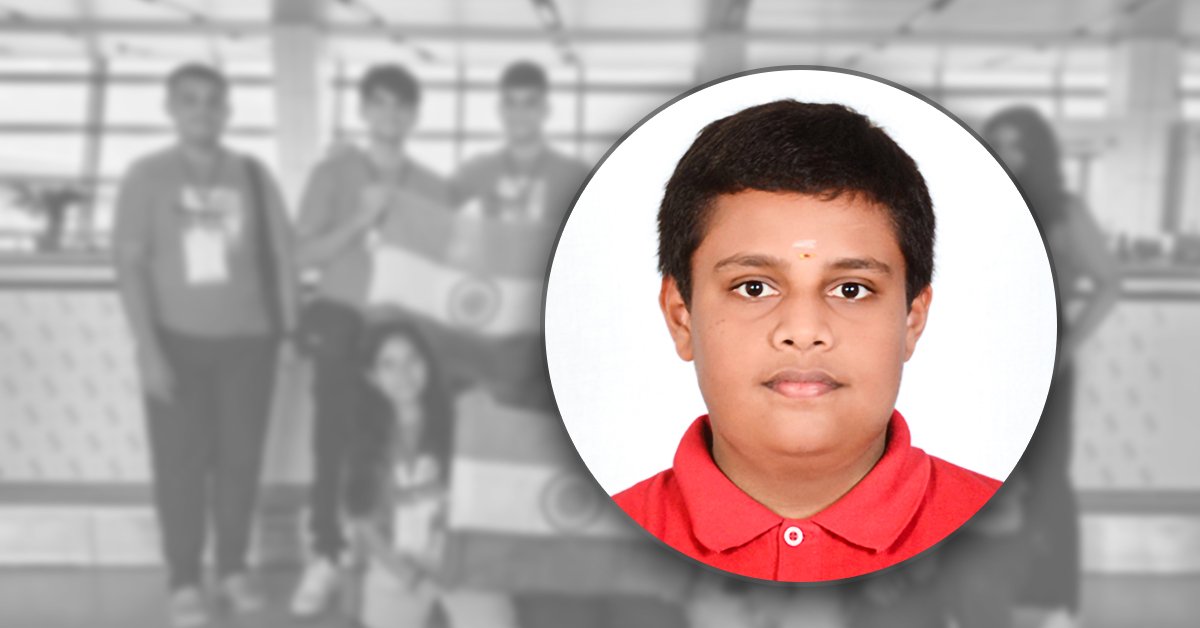
Where Innovation Meets Intention: A Young Leader Designing Sustainable Futures

In this conversation with Global Excellence Digest, Swasthik Swaran P reflects on innovation, responsibility, and what it means to pursue value over visibility. His insights offer a glimpse into how tomorrow’s leaders are already shaping their thinking today.
Q: What first inspired you to explore the intersection of technology and sustainability?
A: Through my experiences, since I have started my journey as a changemaker, I explored the reality of how both technology and sustainability were interlinked to each other. The first source of inspiration for me to explore the intersection of technology and sustainability is through my school textbooks, especially Social Science, where I got to learn about the Industrialisation and how technology has itself led to find the need for sustainability. For an instance, if we compare the previous ages before 2000s, people believed that technology will ruin the nature and it is very hard to achieve sustainability with the current pace of technology development, but however the technologies that are booming up these days like AI, Solar Panels, E-vehicles have proved that technology is evolving itself to become more efficient and achieve sustainability. And, that is why I started to learn more about technology and sustainability side-by-side, without ignoring either one of them. I would also suggest my friends of the current generation to start exploring technology through the eyes of sustainability to build something bigger and better.
Q: You have worked with over 100 volunteers and young peers. What has that experience taught you about leadership at a young age?
A: I started learning each and every time that I spent with them. For example, I worked with a few of the volunteers who were very proficient in speaking, and conveying the idea clearly, but earlier I lacked that skill. I used to do rehearsals for a normal talk around 7-8 times, but my friends used to get it on one go. Initially, I was really fascinated by looking at them, and I began to ask them how are you able to do that perfectly, and I received a few replies which exactly changed the way I think while speaking. And, for those people like me, just remember “Never think about how you are speaking, while you are speaking”. Not just that, I was able to learn a lot of other skills, make some meaningful connections, and improve myself every time. Networking is an important skill that people must develop as they grow, and I realised the importance of networking only after working with a lot of volunteers. Whenever you start something new, the first necessary condition is not money, it is people to trust you and your work, and that is the reason why you need to build your own community of like-minded people around you.
Q: Founding initiatives like E-Sikna and Kidztoons requires initiative and resilience. What motivated you to take that step, and what did you learn in the process?
A: I completely didn’t know about any businesses or start-ups at the age of 14 until I came across the “ATL Tinkerpreneur 2023”, the first step of change in my life. I was a child who used to come home, do homework, play, watch television and sleep just as any other normal kid would do until I came across this opportunity. Once the Tinkerpreneur Bootcamp has started, I learned a lot about businesses, pitches, investments, online marketing, and so many other skills which enabled me to just think like an entrepreneur. And, that ignition made me build these initiatives, and start exploring more about startups. However, now I am not able to continue these initiatives due to some personal constraints, and building E-Sikna and Kidztoons also required some technical skills which I lacked at that time, but however I believe that I would be able to rebuild them into a fully functioning business in the upcoming years. And, I learned a lot of things while building E-Sikna and Kidztoons, which also enabled me to explore other pathways such as volunteering, campus internships, etc. which enabled me to fulfil the technical gap that was in between to build E-Sikna and Kidztoons into a fully-scalable business. The learning that I learned through this process is “it is better to take a break to fill in the gap between us and our vision, than just to stop working.”
Q: You have participated in numerous competitions, conferences, and academic challenges. How have these experiences shaped your mindset and growth?
A: I would say that as a human we would never get a mindset that tells us “Yes, you are perfect now and you have achieved everything’. And, if we get such a thought at any point of time in life, we’ll stop working, and the growth that you have achieved so far just ruins away. That is the reason why most of the successful people in world always keep working by extending their goals. With that inspiration, I started my journey in exploring what the world is seeking forward, and what should I do as my part to support for development. And, that is why I started to make use of most of the opportunities that I have come across. These experiences enabled me to think in a more rational and logical way, understand people around me, enabled me to have effective and meaningful communication with people around me. Just as a tree has branches, then smaller branches, small twigs and so on, I was also able to know about a lot of other new opportunities through the things that I have participated in. Build in that curiosity within yourself to keep exploring, and exploring things never has a limit.
Q: Education and access appear central to your vision. Why do you believe universal access to quality education is critical in an AI-driven world?
A: Of course, we can say that AI can now do anything that humans are capable of doing, and it can also do things beyond our capability. But AI has no meaning if people don’t know about the right way to use it just like there is no use of a smartphone if we don’t know how to use it. “AI is built to support humans, and not to exist as a species on Earth”. That is the reason why it is fundamental for every human to receive basic quality education which builds in the basic knowledge to understand anything that is happening around us. And, the reason why I had a vision of improving the universal access to quality education is because it is the only field that I have known much better than any other field. And, it is only through the primary education that I have received, I was able to explore all these opportunities and explore my own path to success. However, I believe that through intervention of AI in the society, it would be able to add on the quality to the education that is being provided worldwide. For example, I recently read through an article which mentioned that video games nowadays are playing an important role in practical education, and that is how I think that AI is impacting education to become better.
Q: In a future increasingly influenced by artificial intelligence, what qualities should young leaders cultivate to remain ethical, relevant, and impactful?
A: Young leaders should first explore the use of Artificial Intelligence, its purpose, and how it could be useful for them. Recently during a session conducted to students regarding Artificial Intelligence, I observed a student of Class – 7 or 8 continuously spamming the chat asking the answer to the question “What is Artificial Intelligence?”. Initially everyone thought that the student was just trying to disturb the session, but then I gave a thought in mind about this act by the student, and understood the same kind of feeling that I had when I got to know about AI. It is a good quality for any young leader to stay curious about knowing how the things they do impact them and what changes does it create for them just like there is no use of learning addition if you don’t know where to use it. Next, young people must be considerate about what is correct and what is wrong, and this is the place where the intervention of adults is important in making the kids understand. Kids must learn that AI is not to be used for cheating on homework, instead it can be used for helping them complete their homework. Don’t ask the AI to give solutions to the questions you provide before you give a thought about it. Finally, always follow the moral values. Whether it is AI or a human, always speak or chat with respect. To conclude, stay humble always, and work harder to achieve your goals.