From Analog Rooms to Immersive Ecosystems
Corporate and academic learning are at a defining crossroads. The future is no longer about access to information—it is about access to experience. Extended Reality (XR) is emerging not as a technological upgrade, but as a fundamental shift in how capability is built, measured, and scaled.
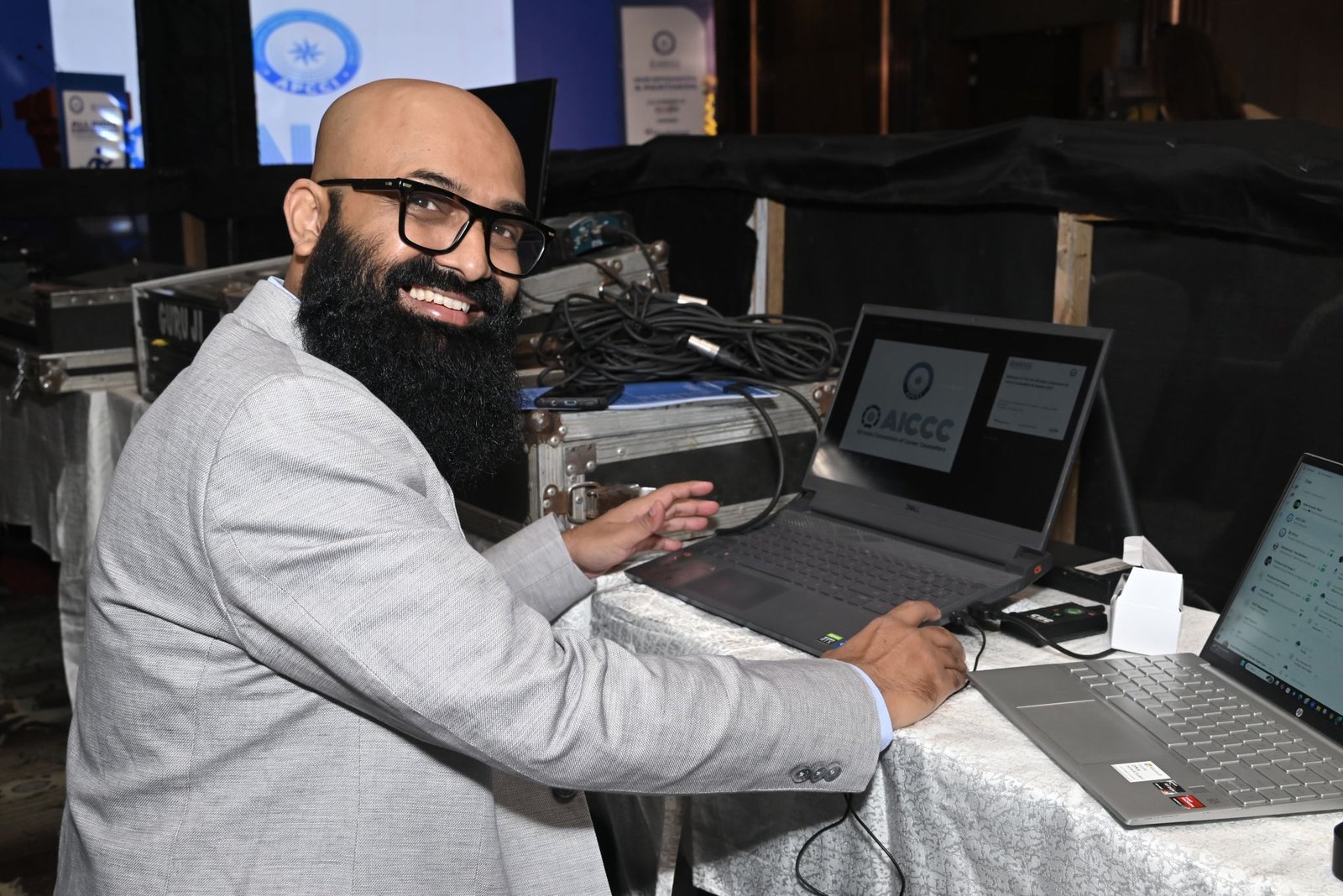
Indrajit Ghosh’s journey—from analog video editing setups in late-1990s Kolkata to building immersive, scalable learning ecosystems—captures this transformation at its core. What began in constraint has evolved into a blueprint for democratizing experiential learning.
“XR is not just a technology—it is an environment where learning becomes real.”
As XR continues to reshape experiential learning ecosystems, its influence is extending far beyond education into the corporate world. Organizations are now leveraging immersive environments to accelerate skill development, improve retention, and build workforce readiness at scale. Explore how this shift is transforming enterprise learning
My journey into immersive learning did not begin with XR, AR, or virtual studios. It began in the late 1990s, in a small setup near Kolkata, working on analog video editing systems. At that time, access to technology was limited, especially outside metro cities. Industry-grade infrastructure was a distant concept for most learners. But even in that constrained environment, one thing was clear to me—this space was going to transform. When digital tools began entering media workflows in the early 2000s, I chose to prepare for that shift. My early exposure to multimedia education helped me understand that storytelling, technology, and skills would soon converge in powerful ways. What I did not know then was that this convergence would eventually lead to immersive learning ecosystems powered by XR. Explore more on Why Industry-Aligned Learning Is the Future of Workforce Readiness
Learning, Doing, and Teaching—All at Once
As I began working professionally, a critical gap became evident. Opportunities in digital media were growing, but skilled talent was scarce. This gap pushed me naturally into training. Initially, it was informal—sharing what I was learning with others. But soon, it evolved into a structured effort when I partnered with Arena Animation under Aptech. However, I was clear about one thing from the beginning, creative education cannot be confined to classrooms. The traditional model limited to theory and software instruction was not aligned with how the industry functioned. So instead of separating training and production, I integrated them. Students worked on real projects and experienced real deadlines and workflows. They were learning extended beyond scheduled hours. And this was my first step toward what we now call experiential learning.
When Classrooms Were Not Enough, We Built Studios
To deepen this approach, I introduced studio-based learning environments. One of the most defining experiments was setting up a local news channel with a virtual studio. What started as an experiment became a powerful training ecosystem.
Students were no longer just learners but creators. They were shooting and editing content, producing real-time outputs, understanding production pipelines, presenting and collaborating. They spent more time in studios than in classrooms.
That shift from passive learning to active creation changed everything. Today, this model aligns closely with immersive learning principles, where environments simulate real-world contexts.
From Studios to XR: The Evolution of Experiential Learning
The transition from physical studios to XR-enabled environments is not a disruption. It is a natural evolution. XR (Extended Reality), which includes AR and VR, allows us to simulate real-world production environments, create safe spaces for experimentation and enable learning without physical limitations. In many ways, what we tried to achieve with physical studios, XR can now scale exponentially.
For example:
A student in a Tier 3 town can experience a virtual production pipeline. Complex workflows can be simulated without expensive setups. Learning becomes interactive, immersive, and repeatable.
XR is not just a technology but an environment builder. Building in Resource-Constrained Environments
One of the biggest misconceptions about immersive learning is that it requires high-end infrastructure. My experience suggests otherwise. Having worked extensively in Tier 2 and Tier 3 regions, I have learned that constraints often drive innovation. Some key realities include that institutions operate with limited budgets. Or faculty may not be trained in emerging technologies. Moreover, infrastructure gaps could be significant. Yet, scalable solutions are possible.
How do we approach this then? Hybrid Infrastructure Models which combine physical studios with digital and XR layers, or Modular Setups, meaning starting small and expanding gradually might help curb some issues. Additionally, Shared Resource Ecosystems enable multiple institutions to access common infrastructure and cloud and Software-Led Learning reduces dependency on heavy hardware. The focus should not be on building the most advanced lab but on building the most effective learning environment within constraints.
The Role of Industry Partnerships
No ecosystem can scale in isolation. Throughout my journey, collaborations with industry partners like Adobe, Panasonic, Autodesk, and broadcast technology providers have played a crucial role. These partnerships enable access to latest tools and workflows, faculty training and up-skilling Curriculum alignment with industry needs and build exposure to real-world standards. Industries do not just bring technology, they bring relevance. For immersive learning to succeed, academia and industry must function as a connected ecosystem rather than parallel entities.
Bridging the Skills Gap in AVGC and Creative Industries
India’s AVGC (Animation, Visual Effects, Gaming, Comics) sector is at a pivotal moment. Global demand for creative talent is rising while India is emerging as a major outsourcing hub The creator economy is expanding rapidly. Yet, the skills gap remains a critical challenge. Traditional education models struggle to keep pace with industry requirements. This is where immersive and experiential learning becomes essential. By integrating XR-based simulations, Studio-based training and Industry-led projects, we can create job-ready talent, not just degree holders. The goal is not just employment, it is capability building. Read more on Future-Ready Skills: What Employers Are Really Looking For
Democratizing Access: Bringing Metro-Level Exposure Everywhere
One of my core motivations has always been to ensure that geography does not define opportunity. In the early years, quality training was concentrated in metro cities. But talent exists everywhere. By building localized infrastructure and now integrating XR students in smaller towns can access global-quality learning, confidence levels improve significantly, career aspirations expand and infrastructure, when designed correctly, becomes a tool for democratization.
The Real Meaning of Infrastructure
Over the years, my understanding of infrastructure has evolved. It is not just about equipment, studios or technology. It is about what these enable. Infrastructure should create access, build confidence, connect learning with outcomes.
A studio is not just a physical space. An XR lab is not just a technology layer. They are environments where ideas take shape, skills become visible and careers begin to feel real.
Challenges That Still Remain
While progress is significant, several challenges need attention. Lack of awareness among institutions, resistance to change in traditional systems, limited trained faculty in XR and immersive tools, budget constraints in large-scale adoption are some of the multiple issues which need attention. Addressing these requires policy support, industry-academia collaboration and scalable implementation frameworks.
Looking Ahead: The Future of Immersive Education Ecosystems
India is already taking strong steps like AVGC Taskforce initiatives, State-level policies Increasing investment in creative infrastructure, discussions around the “orange economy.” Globally, immersive learning will move from being an innovation to a necessity. The future will not be defined by classrooms vs online learning. However, experiential environments vs passive consumption, XR, AI, and real-time technologies will reshape how we learn, create, and collaborate.
A Personal Reflection
This journey has been anything but linear. There were uncertainties, risks, and moments when the path was unclear. But I chose to stay committed to the process. Looking back, I do not measure success only by scale or numbers. I measure it by the ecosystem that has emerged, one that now supports thousands
of learners and professionals.
Final Thought
If there is one lesson from this journey, it is this: Start with purpose. Build with honesty. Scale with intent. Technology will continue to evolve. But if learning remains rooted in real experiences, we will not just prepare students
for jobs, we will prepare them for journeys.