
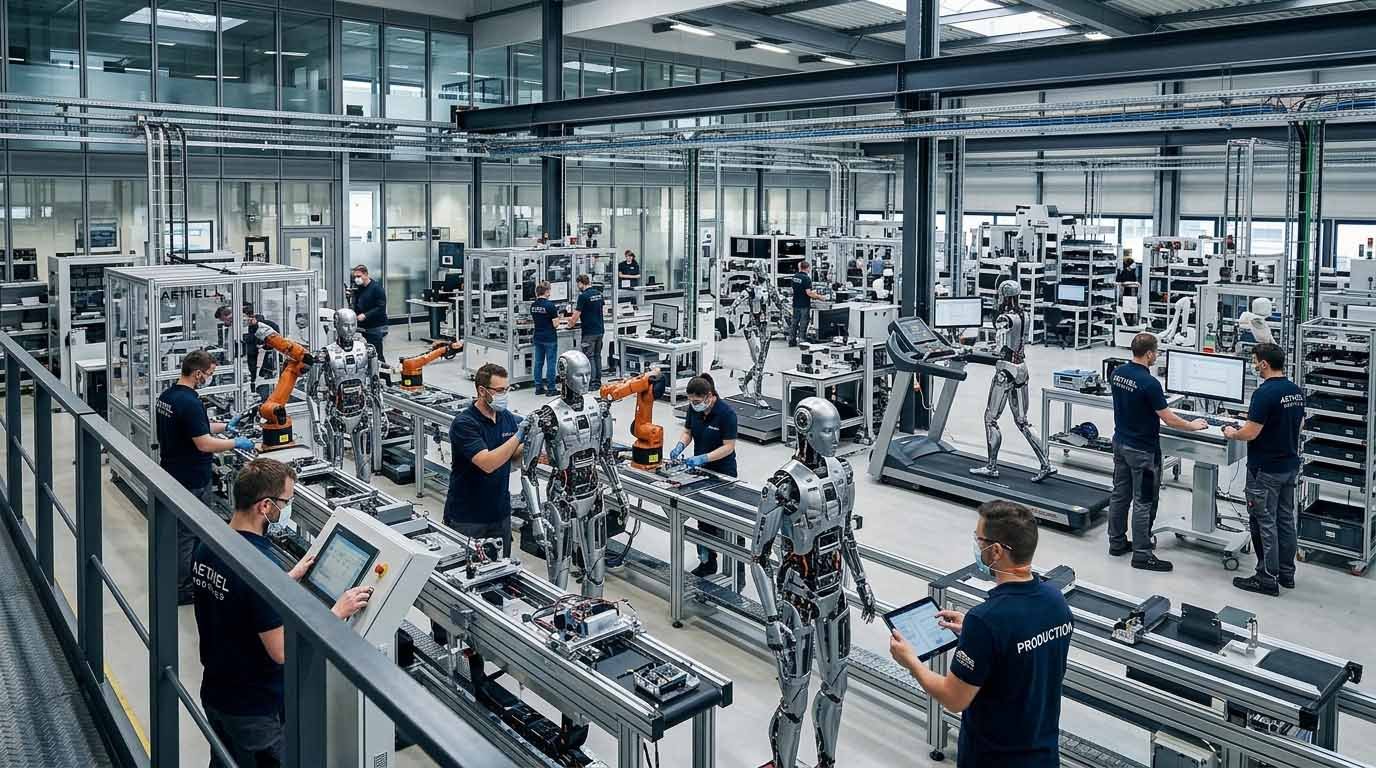
Humanoid Robotics Moves from Prototype to Production Floors

For decades, humanoid robots occupied a symbolic space within technological innovation. They appeared in research laboratories, engineering showcases, and futuristic demonstrations, offering glimpses of what automation might one day become. In 2026, that future is beginning to take tangible shape.
Across warehouses, logistics centres, and advanced manufacturing facilities, humanoid robots are transitioning from experimental prototypes to operational pilots. What was once largely a research ambition is now evolving into a practical business application.
Recent advances in artificial intelligence, machine vision, mobility, and dexterity have significantly expanded the capabilities of humanoid systems. Modern robots can navigate dynamic environments, identify and manipulate objects with increasing precision, perform repetitive lifting tasks, sort inventory, and interact with equipment designed for human use. These developments are narrowing the gap between human adaptability and machine efficiency in ways previously considered unattainable.
Major technology companies and industrial manufacturers are investing heavily in large-scale pilot programmes to evaluate how humanoid robotics can enhance productivity, improve operational continuity, and address workforce challenges. While widespread deployment remains in its early stages, the shift from demonstration projects to real-world implementation represents a significant milestone in the evolution of automation.
The economic case is becoming increasingly compelling. Many industries continue to face persistent labour shortages, particularly in physically demanding, repetitive, or hazardous roles. In response, organisations are exploring robotics not simply as a cost-saving mechanism but as a strategic solution to workforce constraints. The conversation is gradually moving away from replacement and toward augmentation, where humans and machines operate alongside one another to improve overall performance.
Nevertheless, significant challenges remain. Development and deployment costs are still substantial, technical limitations continue to exist, and regulatory frameworks have yet to fully catch up with the pace of innovation. Questions surrounding liability, workplace safety, cybersecurity, and ethical decision-making remain active areas of discussion among policymakers and industry leaders.
Perhaps the most pressing challenge is organisational readiness. Successfully integrating humanoid robotics requires more than technological investment. It demands thoughtful governance, workforce planning, employee retraining, and transparent communication. Companies must carefully consider how automation impacts workplace culture, job design, and long-term talent strategies.
The technological frontier is advancing rapidly, but technology alone will not determine the outcome. The organisations that derive the greatest value from humanoid robotics will be those that approach adoption with clarity, responsibility, and strategic intent.
As humanoid robots move from prototypes to production floors, the defining question is no longer whether the technology is ready. Increasingly, the question is whether institutions are prepared to evolve alongside it.