Leadership in Transition: Who Really Holds Power in 2026?
For much of modern corporate history, leadership power was predictable. It lived inside hierarchy. It was reinforced by designation. It travelled downward through reporting lines and outward through institutional authority. Leaders were insulated by structure, shielded by scale, and rarely questioned beyond boardrooms or annual reviews.
That model shaped how success was measured and how leaders behaved. Power meant control. Influence meant reach. Accountability, when it existed, moved slowly and privately.
By 2026, that architecture of power is quietly but decisively eroding.
This is not because leadership has lost relevance. On the contrary, leadership has become more consequential than ever. But the conditions under which authority is granted have changed. Visibility has increased. Trust has become fragile. Credibility is now dynamic rather than assumed.
According to global workforce studies, over 70 percent of employees say they no longer trust leadership based solely on title or tenure. Instead, trust is shaped by consistency, transparency, and perceived integrity. Leadership today is evaluated continuously, not episodically.
What this signals is a deeper shift. Power is no longer inherited through structure. It is earned through behaviour. Leaders are no longer protected by institutions; institutions are increasingly judged through their leaders.
The world has become less forgiving of opacity and less impressed by scale alone. Decisions are scrutinised in real time. Internal culture is reflected externally. Silence communicates as loudly as speech. In such an environment, authority cannot rely on distance.
The central question facing leadership in 2026 is not who sits at the top, but who is trusted to lead when outcomes, values, and consequences are visible to all. Power is still present. But it has moved closer to the surface—and closer to scrutiny.
Transformation Fatigue and the Strategic Reset
Transformation has become the dominant language of leadership. Digital transformation, AI transformation, cultural transformation—often layered simultaneously. Change has been framed as perpetual and urgency as a permanent condition.
Yet beneath this narrative lies a growing exhaustion.
Employee engagement studies indicate that organisations undergoing continuous transformation initiatives without consolidation see a marked decline in trust in leadership intent. When everything is positioned as transformational, very little feels meaningful.
Transformation fatigue is not resistance to change. It is resistance to noise.
Leaders today face a paradox. While adaptability remains essential, constant reinvention without integration erodes confidence. Announcements outpace execution. Vision statements multiply while clarity diminishes. Over time, transformation becomes theatre rather than progress.
By 2026, leadership power is shifting toward those who can reset rather than relentlessly reframe.
A strategic reset requires discernment. It involves slowing down long enough to decide what truly matters, what must evolve, and what must be stabilised. It prioritises depth over breadth and execution over narrative.
Leaders who can create focus amid complexity are emerging as anchors. Stability, once misinterpreted as inertia, is now recognised as competence. In an era defined by disruption, the leader who knows when not to disrupt becomes a source of confidence.
Power in this context is quiet. It does not announce itself loudly. It earns trust through consistency and restraint.
Institutions vs Individuals: Where Power Is Shifting Institutions have historically been the primary holders of authority. Their scale, history, and reach conferred legitimacy. Individuals derived influence through association with these structures, and institutional reputation often absorbed leadership shortcomings. That balance has changed.
Global trust indices consistently show declining confidence in large institutions, while trust in individual leaders remains more elastic. People no longer ask only what an organisation represents; they ask who leads it and how that leadership behaves under pressure. This does not signal the decline of institutions. It signals their humanisation.
Power is increasingly concentrated in individual credibility. Leaders are now perceived as the moral and strategic face of the institutions they represent. Their conduct shapes reputation far more directly than policy statements or brand messaging. At the same time, individuals without formal authority can now influence discourse, mobilise communities, and shape outcomes through clarity and consistency. Influence is no longer monopolised by hierarchy.
By 2026, leadership power exists at the intersection of institutional responsibility and personal integrity. Titles may open doors, but trust determines whether leaders are followed.
Sustainable Leadership vs Aggressive Growth
The past two decades rewarded leaders who moved fast and scaled aggressively. Growth was treated as a proxy for competence. Expansion signalled ambition. Leaders who pushed relentlessly forward were celebrated, often without equal attention to the human and structural costs of that momentum. This approach delivered scale, but it also normalised fragility. Recent organisational data shows that companies prioritising hypergrowth without corresponding investment in culture and systems experience leadership churn at nearly twice the industry average. Burnout, ethical drift, and reputational instability have emerged not as anomalies, but as predictable outcomes of unsustainable leadership models. By 2026, this reality is reshaping how power is perceived.
Sustainable leadership is no longer framed as cautious or conservative. It is increasingly recognised as strategic. Leaders who can generate results while preserving organisational health command deeper trust. They are seen not as restraining progress, but as ensuring its continuity. Sustainability in leadership is about endurance. It reflects a leader’s ability to build systems that do not collapse under pressure, cultures that do not fracture under growth, and strategies that remain credible over time. It requires resisting the temptation to equate speed with effectiveness. Stakeholders are paying closer attention to how outcomes are achieved. Investors, employees, and partners are placing greater value on predictability, governance, and leadership maturity. The leader who can balance ambition with restraint is increasingly perceived as more powerful than the one who simply accelerates. In this shift, power belongs to leaders who understand that long-term credibility compounds, while short-term spectacle depreciates.
Leadership Accountability in a Transparent World
Transparency has fundamentally altered the leadership contract. Decisions are visible. Cultures are examined. Contradictions surface quickly. Silence is interpreted. Delay is judged. Leadership today unfolds in public view.
Research shows that leaders who acknowledge mistakes and explain trade-offs retain significantly higher trust than those who attempt to manage perception or deflect responsibility. Accountability, once treated as risk, is increasingly understood as a stabilising force. In a transparent world, leadership power does not come from controlling narrative. It comes from coherence. Do actions align with stated values? Do internal decisions reflect external commitments? Is leadership behaviour consistent across contexts? The ability to withstand scrutiny has become a core leadership competency. Leaders who embrace accountability signal confidence and maturity. Those who resist it often lose authority rapidly. By 2026, power belongs to leaders who recognise that accountability is not a concession, but a form of leadership capital.
The New Leadership Mandate
Leadership in 2026 is defined less by dominance and more by stewardship. Power is no longer something leaders accumulate and protect. It is something they are trusted to hold responsibly. The new leadership mandate requires coherence over control, restraint over reflex, and trust over insulation. It asks leaders to think beyond immediate outcomes and consider the systems, cultures, and people they leave behind. Equally important is what leaders must unlearn. The belief that pressure equals performance. The assumption that growth justifies all trade-offs. The reflex to project certainty rather than practise discernment. Leadership today is not about commanding progress. It is about creating the conditions under which progress can endure.
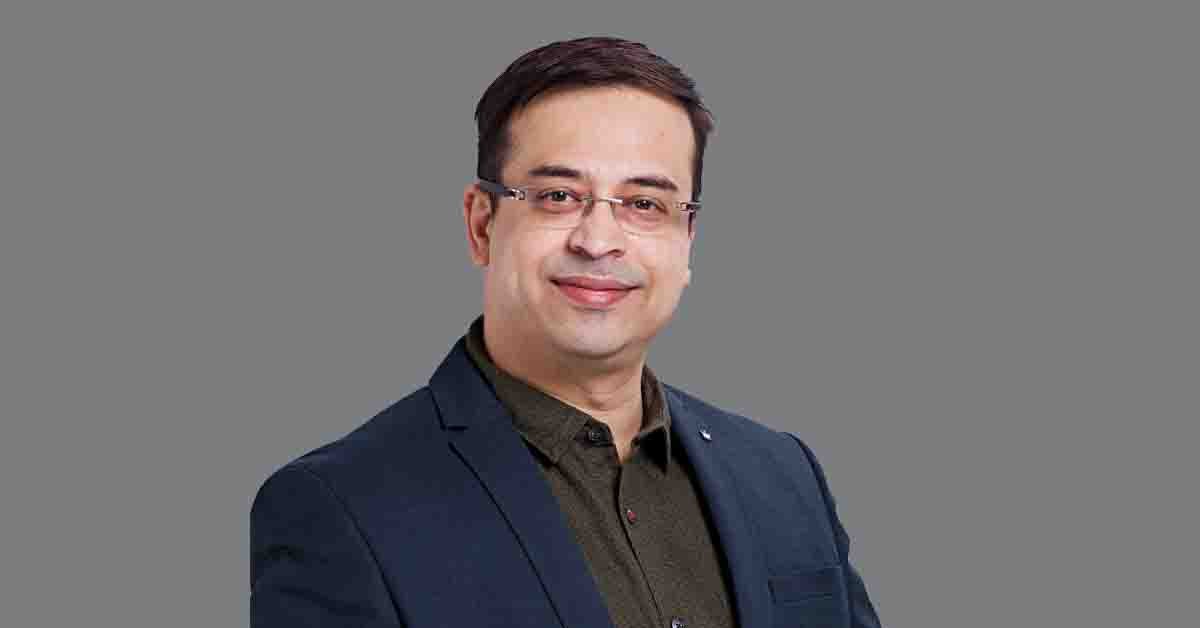
As a founder, I believe the most powerful leaders of 2026 will not be those who dominate conversation, but those whose presence brings clarity. Not those who chase visibility, but those whose decisions withstand it. Power has not disappeared. It has matured. And in the years ahead, it will belong to those trusted enough to carry it.