
Redefining Success in education : Preparing Learners for Life, Leadership and the Future

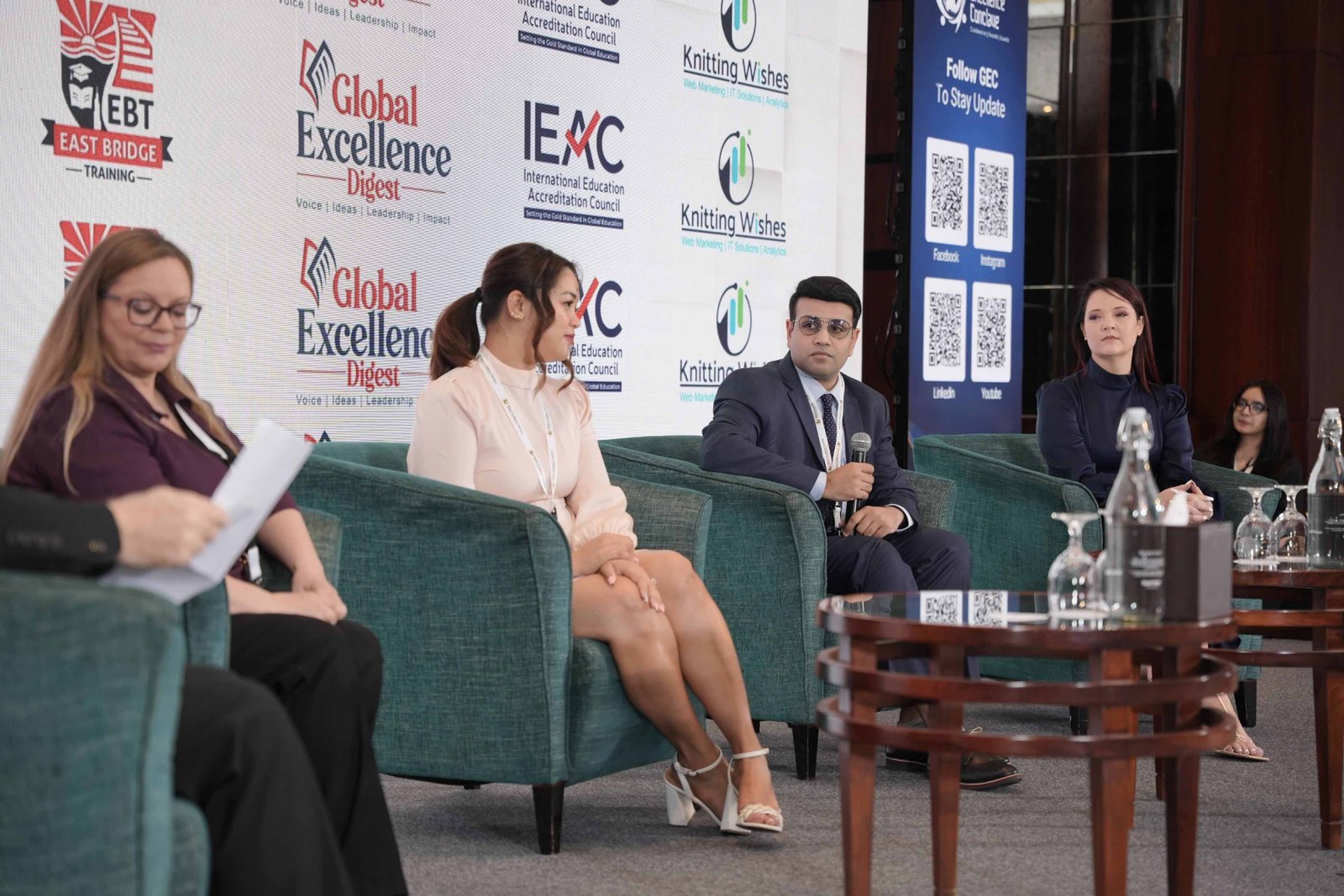
What does it mean to prepare a learner not just for exams, but for life? That was the animating question behind this panel discussion, which brought together five voices spanning classroom practice, university leadership, curriculum design, and educational technology. Rather than treating ‘success’ as a fixed academic benchmark, the conversation set out to explore what a broader, more human definition of achievement could look like — one that accounts for leadership capacity, adaptability, and readiness for a rapidly shifting future. Eli Ghazel, a founding member of the Copperstone Education Governing Board, brought a practitioner’s lens shaped by decades in English language teaching, curriculum development, and teacher training. As an author and speaker as well as an educator, Ghazel’s contributions would be expected to center on how classroom pedagogy itself needs to evolve — moving from content delivery toward building learners who can think critically and communicate confidently across contexts. Dr. Janat Clemis, Director General of East Bridge University in Paris, added an institutional and leadership perspective. With a Ph.D. and dual M.Ed./B.Ed. degrees alongside ICF coaching accreditation and Distinguished Toastmaster honors, Clemis’s contribution likely drew connections between coaching methodology and how universities can build leadership pipelines into academic programs — reframing higher education as a space that cultivates self-directed, resilient learners.
Ana Maitland, Gifted & Talented Coordinator and Special Education Teacher at GEMS Founders School, represented the inclusive-education vantage point. Holding an M.Ed. in Leadership and a PGCE, Maitland’s work sits at the intersection of differentiated instruction and identifying potential across the full spectrum of learners — a perspective that would have pushed the panel to consider what ‘success’ means for gifted students and those with additional learning needs alike, resisting one-size-fits-all definitions.
Dr. Shaikh Abdulla Xec, Founder and CEO of Slangit Technologies and founder of aiSTART by Slangit, brought the technology and innovation dimension. His work building AI-driven learning tools positions him to speak to how artificial intelligence is reshaping the skills learners actually need — and how educators can integrate emerging technology without losing sight of human development. Dr. Mari Simpson, founder of Built for Capacity Consultancy and holder of dual doctorates in Education Leadership and Psychology, rounded out the panel with a systems-level view. Her background suggests a focus on institutional capacity-building — how schools and school leaders can be equipped, psychologically and structurally, to support the kind of holistic learner development the panel was exploring.
A recurring thread across the panel was the idea that leadership readiness cannot be bolted onto education as an afterthought — it has to be designed into how students are taught, assessed, and supported from an early age. Whether through language fluency, coaching-informed teaching, inclusive practice, AI-enabled personalization, or institutional capacity-building, each panelist’s domain offered a different lever for the same outcome: learners who leave the classroom equipped not only with knowledge, but with judgment, adaptability, and the confidence to lead.
Together, the panel’s composition — spanning ELT pedagogy, university leadership, inclusive education, edtech innovation, and organizational capacity — pointed toward a shared conclusion: redefining success in education is not a single fix but a coordinated shift across classrooms, institutions, and technology, all aimed at preparing learners who are ready not just to pass, but to lead.