Child-Centred Alternative Education Models

Across continents, education is no longer confined to a single institutional structure. While traditional schooling continues to serve millions, a growing number of child-centred alternative education models are emerging as parallel ecosystems—reshaping how we understand learning, development, and human potential.
These models do not position themselves in opposition to mainstream education. Instead, they expand the spectrum of possibilities. They challenge the assumption that learning must follow uniform timelines, standardised curricula, or fixed classroom boundaries. In doing so, they introduce a deeper conversation about autonomy, environment, creativity, and individual growth.
At the heart of child-centred alternative learning lies a simple but transformative idea: education begins with the learner. Rather than asking children to adapt to rigid systems, these approaches adapt systems to children’s developmental rhythms, interests, and cognitive patterns.
Models such as Unschooling, Homeschooling, Forest Schooling, Montessori education, and Waldorf education represent diverse philosophies—but they share common threads:
- Respect for individual curiosity
- Emphasis on experiential learning
- Holistic child development
- Reduced reliance on standardised testing
- Greater learner agency
Globally, education leaders are observing how elements of these systems are influencing mainstream classrooms. Nature-based learning modules are entering urban schools. Personalised learning plans are becoming more common. Creative arts integration is being recognised as essential rather than supplementary. In many ways, what was once considered “alternative” is now informing institutional reform.
For lifelong learning advocates, this shift is significant. If education is to prepare future-ready learners—adaptive thinkers, empathetic leaders, resilient problem-solvers—then learning environments must evolve beyond rigid academic performance metrics.
Child-centred alternative models offer insight into how education can balance structure with freedom, knowledge with exploration, and achievement with well-being.
They are not replacements for traditional systems. They are complementary innovations—expanding the educational landscape and prompting deeper reflection on what it truly means to educate.
As the world rethinks schooling in an era of rapid technological, environmental, and social transformation, these parallel ecosystems provide valuable lessons on how learning can remain deeply human.
Reimagining Learning Through Autonomy and Curiosity
Unschooling is a learner-led education model grounded in the belief that curiosity, not curriculum, is the most powerful driver of knowledge. Unlike traditional systems that operate through structured syllabi, standardised testing, and predefined academic timelines, unschooling allows children to guide their own learning journeys based on personal interests, lived experiences, and emerging questions about the world around them.
The philosophy rests on the idea that learning is a natural human process. Children, when trusted and supported, instinctively explore, experiment, and construct understanding. In this model, education does not begin with textbooks or lesson plans but with observation, conversation, discovery, and engagement with real environments. Parents or mentors act not as instructors delivering content, but as facilitators creating access to resources, experiences, and intellectual exposure. Structure is not absent—it simply emerges organically from the learner’s rhythm rather than being externally imposed.
Supporters of unschooling argue that intrinsic motivation deepens engagement and strengthens retention. When children pursue subjects that genuinely interest them, they often develop advanced knowledge in those areas and cultivate independent research skills. Without the pressure of constant assessment, learners may experience reduced academic anxiety and a healthier relationship with intellectual exploration. The emphasis shifts from performance metrics to meaningful understanding, from compliance to autonomy.
Yet unschooling also invites important questions. Critics raise concerns regarding foundational literacy and numeracy skills, social integration, and transitions into higher education systems that remain largely structured. The effectiveness of unschooling is closely tied to parental involvement, access to diverse learning environments, and community engagement. Freedom without thoughtful guidance can lead to fragmentation, while well-facilitated autonomy can lead to remarkable intellectual growth.
What makes unschooling particularly significant in contemporary discourse is not whether it replaces traditional schooling, but how it influences it. Many mainstream systems now incorporate passion projects, interdisciplinary learning, flexible curricula, and personalised pathways—principles long associated with self-directed education. In this sense, unschooling functions less as a fringe movement and more as a laboratory of educational experimentation.
It may not be universally applicable, nor intended to be. However, it contributes a vital perspective to the global conversation on lifelong learning: that education thrives when curiosity is not constrained, but trusted.
Personalised Education Within the Home Environment
Homeschooling represents one of the most established and widely practised forms of alternative education. Unlike unschooling, which is largely fluid and interest-driven, homeschooling often maintains structured academic goals while relocating the learning environment from institutional classrooms to the home. It offers families the flexibility to design curricula, schedules, and teaching approaches that align with their values, cultural context, and a child’s individual pace of development.
At its core, homeschooling is built on the principle of personalised education. Rather than adapting a child to a uniform classroom model, the educational structure adapts to the learner. Instruction can be accelerated in areas of strength and reinforced where additional support is required. This flexibility allows for a highly responsive learning experience, particularly for children who may struggle within standardised systems or those who thrive in focused, low-distraction environments.
Globally, homeschooling has expanded across diverse socioeconomic and cultural landscapes. Some families choose it for philosophical or pedagogical reasons, others for religious or cultural alignment, and many for practical considerations such as mobility, special learning needs, or dissatisfaction with conventional schooling structures. Advances in digital platforms and distance learning tools have further strengthened homeschooling ecosystems, providing access to online courses, collaborative learning communities, and globally recognised certifications.
One of the defining strengths of homeschooling lies in its ability to integrate academic learning with real-world experience. Education does not remain confined to a classroom timetable; it can unfold through travel, community engagement, internships, and interdisciplinary projects. This integration can nurture independent thinking, strong family engagement in education, and close mentorship relationships between learner and educator.
However, homeschooling also presents important considerations. It demands sustained parental commitment, organisational discipline, and access to adequate learning resources. Socialisation, often cited as a concern, requires intentional planning through peer networks, extracurricular programmes, or community groups. Additionally, regulatory frameworks vary widely across countries, influencing how homeschooling is monitored and recognised within formal academic pathways.
In contemporary education reform discussions, homeschooling holds a distinctive position. It demonstrates that structured academic learning need not be confined to institutional walls. Increasingly, elements of homeschooling—such as personalised pacing, blended digital learning, and flexible assessment models—are being integrated into mainstream education systems.
Homeschooling does not seek to replace schools; rather, it broadens the architecture of learning possibilities. It reflects a growing global understanding that education is not defined solely by location, but by the quality of engagement, structure, and intentional design that surrounds the learner.
Learning Through Nature and Environmental Immersion
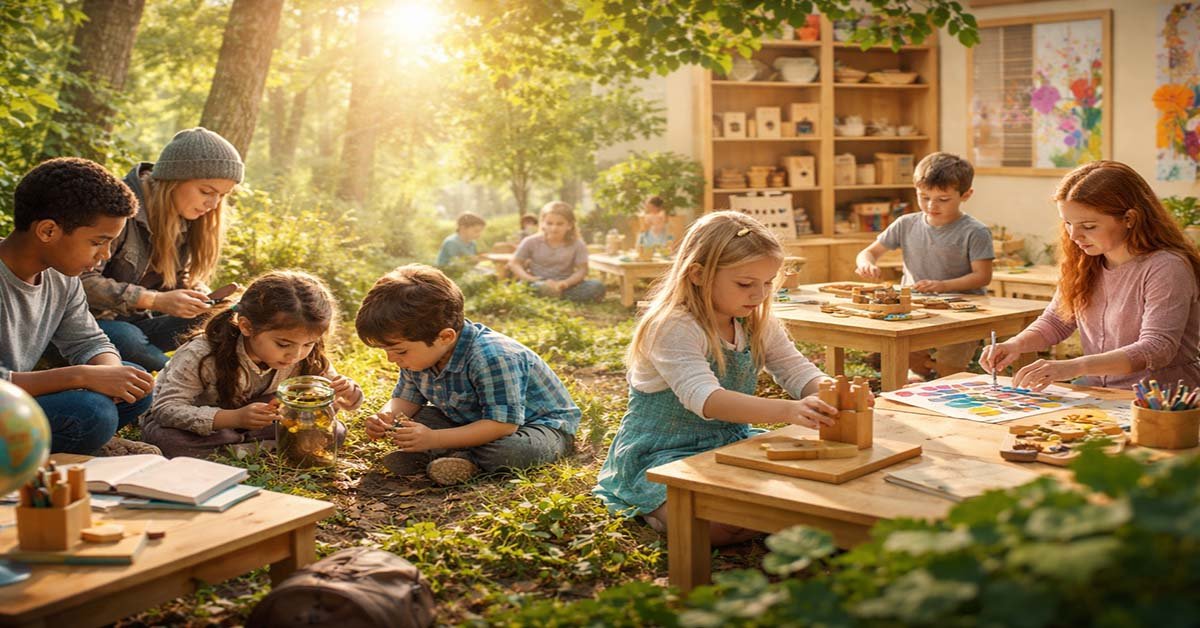
Forest schooling, often referred to as nature-based education, is an approach that relocates learning from conventional classrooms into outdoor environments. Originating in parts of Scandinavia and later expanding across Europe, North America, and other regions, forest schooling rests on a simple yet profound idea: nature is not merely a backdrop to education, but an active participant in it.
In forest schooling models, children spend significant portions of their learning time outdoors, regardless of weather conditions. Lessons unfold through direct interaction with natural landscapes—forests, parks, gardens, and open spaces. Academic concepts are not abandoned; rather, they are woven into lived environmental experiences. Mathematics may emerge through measuring tree growth, literacy through reflective journaling about seasonal changes, and science through observing ecosystems in real time.
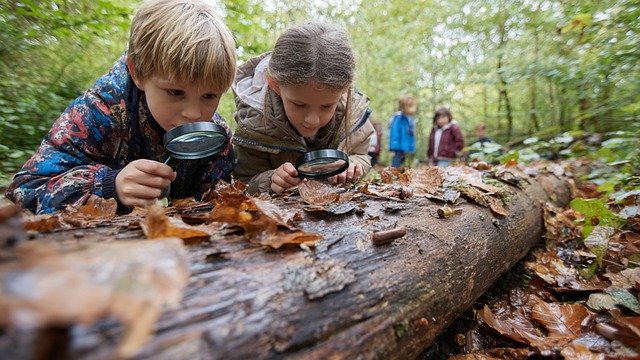
The philosophy underlying forest schooling emphasises resilience, sensory engagement, and emotional grounding. Advocates argue that sustained interaction with natural environments strengthens problem-solving abilities, enhances concentration, and fosters environmental stewardship. Unlike rigid classroom settings, outdoor environments introduce unpredictability, requiring children to adapt, collaborate, and assess risks thoughtfully.
Forest schooling also addresses growing global concerns about children’s reduced exposure to outdoor play and rising screen dependency. By encouraging tactile exploration, physical movement, and ecological awareness, it seeks to rebalance developmental experiences in increasingly urbanised societies.
Critics often question scalability, safety, and academic rigour. Implementing forest schooling requires trained facilitators, safe access to outdoor spaces, and alignment with regulatory standards. However, even in traditional urban schools, elements of forest education are being adopted through outdoor classrooms, garden-based projects, and environmental learning modules.
Forest schooling does not suggest abandoning formal education structures. Instead, it reminds institutions that learning is deeply connected to place. In an era defined by environmental crisis and climate awareness, reconnecting education to nature carries both pedagogical and societal significance. It reinforces the idea that intellectual growth and ecological consciousness can evolve together.
Structured Freedom in a Prepared Environment
The Montessori method, developed by Italian physician Maria Montessori in the early twentieth century, is one of the most globally recognised child-centred education models. Unlike unschooling’s fluidity or homeschooling’s family-based structure, Montessori education operates within carefully designed classroom environments known as “prepared environments.” These spaces are intentionally structured to foster independence, concentration, and self-paced learning.
Montessori classrooms are characterised by mixed-age groups, specialised learning materials, and an emphasis on practical life skills alongside academic development. Children choose activities within a structured framework, allowing autonomy within boundaries. This balance between freedom and order distinguishes Montessori from both conventional schooling and more fluid alternative models.
The philosophy emphasises respect for the child as an active constructor of knowledge. Rather than direct instruction dominating the classroom, educators observe, guide, and introduce materials when developmental readiness is evident. Learning becomes experiential and tactile; abstract concepts are introduced through concrete materials before moving toward conceptual understanding.
Montessori education supports cognitive development while also nurturing social responsibility and emotional regulation. Because learners progress at individual paces, comparison and competition are minimised. The environment encourages intrinsic motivation rather than performance driven by external rewards.
Globally, Montessori principles have influenced mainstream early childhood and primary education reforms. Concepts such as child-sized furniture, experiential materials, and self-directed activity blocks have found their way into conventional classrooms. The model’s longevity and international expansion reflect its adaptability across cultures and contexts.
While some critique Montessori for its structured materials or question transitions into traditional secondary education systems, the method remains one of the most enduring examples of child-centred pedagogy. It demonstrates that structure and autonomy need not be oppositional; when thoughtfully designed, they can coexist harmoniously.
Imagination, Arts, and Holistic Development
Waldorf education, founded by Austrian philosopher Rudolf Steiner in the early twentieth century, presents a holistic model that integrates academics with artistic expression, storytelling, and developmental psychology. Unlike models that prioritise academic acceleration, Waldorf education aligns learning content with distinct developmental stages, emphasising imagination and creativity in early years and gradually introducing abstract reasoning.
Waldorf classrooms are often characterised by natural materials, rhythmic schedules, and limited early exposure to digital technology. The curriculum places strong emphasis on music, drama, handcrafts, and visual arts alongside mathematics, science, and language studies. Learning unfolds through narrative, experiential projects, and thematic immersion rather than fragmented subject blocks.
Central to Waldorf philosophy is the belief that intellectual development cannot be separated from emotional and creative growth. Education is viewed as a holistic journey addressing thinking, feeling, and willing—the cognitive, emotional, and practical dimensions of the learner. This integrated approach seeks to cultivate balanced individuals capable of empathy, critical reflection, and artistic appreciation.
Waldorf education has attracted global communities seeking alternatives to exam-driven systems. Its focus on imagination, storytelling, and delayed formal academics in early childhood distinguishes it from many contemporary education models. At the same time, critics debate its limited technology integration and its philosophical underpinnings.
Nevertheless, Waldorf’s influence is visible beyond its own schools. The growing recognition of arts integration, socio-emotional learning, and rhythm-based classroom structures in mainstream education echoes many of its foundational principles.
Waldorf education does not claim to replace traditional schooling. Rather, it contributes to a broader dialogue about human development—reminding educators that creativity, emotional intelligence, and imagination are not supplementary to learning but integral to it.