
From Simulation to Transformation : XR’s Role in Corporate Learning Futures

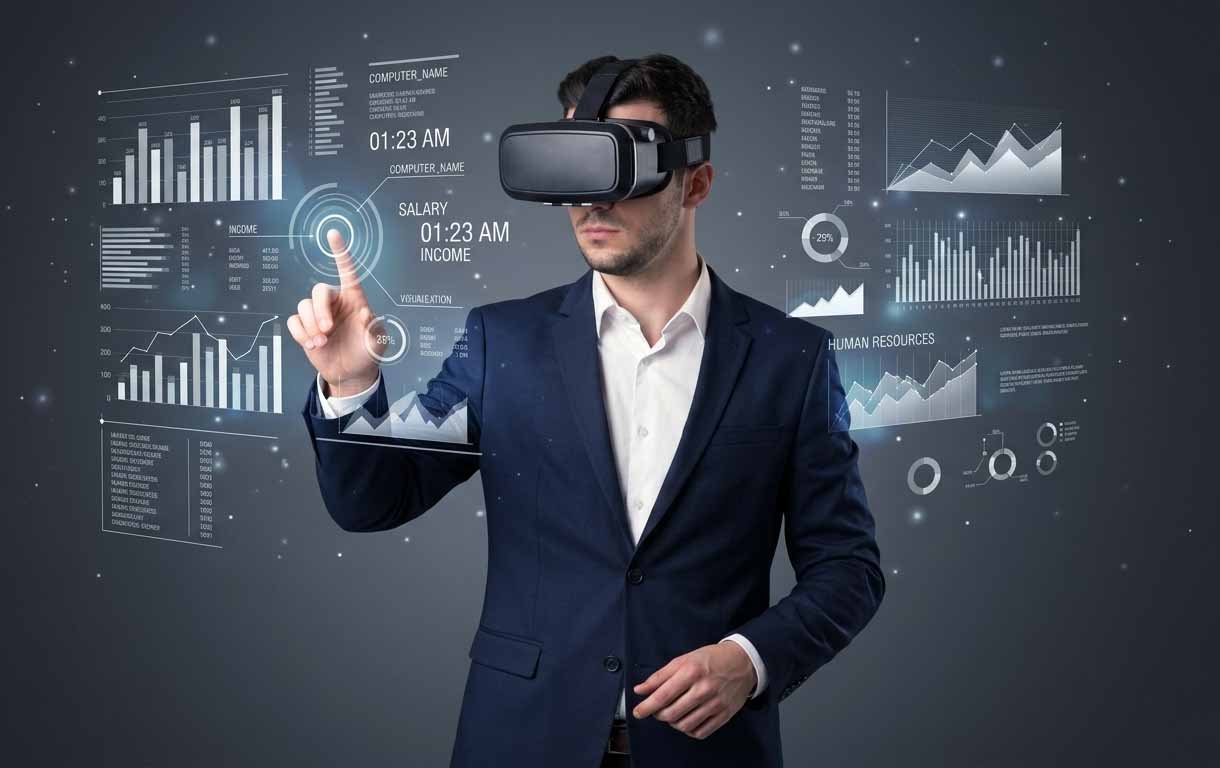
Extended Reality is no futuristic experiment any more. It is fast becoming a landmark of corporate learning. Companies worldwide are shifting from traditional training models to immersive and data-driven environments that promise higher retention, lower risk and measurable impact.
Why XR Learning Delivers Higher Retention
Learning within simulations yields retention rates of 75-90% compared to the mere 5% within lectures. XR simulations are replicating real-world tasks and allowing employees to practice, giving space to fail and setting them up for inevitable success- all within a controlled environment. The ultimate result? Knowledge that lasts beyond 40 hour work hours.
EdTech has promised innovation in learning delivery. XR takes the responsibility to deliver on it. It merges pedagogy with technology, transforming passive modules into active and experimental learning. Content i s not only for consumption but also for interaction, embodiment and retention.
EdTech’s strongest argument for XR by far is knowledge that sticks when learners practice in immersive simulations. For corporate training, in particular, this means faster skill acquisition and a stronger workforce readiness along with employee confidence.
Global organisations which face the challenge of delivering consistent training across multiple locations, geographically and linguistically might find respite in XR. A single program deployed worldwide ensures uniform learning globally. This makes resources accessible and practical. XR platforms also generate detailed performance metrics. This drives forward accuracy, speed and engagement levels. They also measure ROI, refine training modules and align learning outcomes with business goals. For corporate leaders, training becomes evidence based more than experimental.
The next phase at EdTech will be defined by immersion. XR is not just a tool for corporate training. It is a platform for reimagining how knowledge is delivered, shared and applied. XR will serve as the bridge between digital and physical spaces. This also enables seamless transitions from simulations to real world practice. The future points to XR classrooms where students collaborate transcontinentally. Shared virtual spaces are becoming the norm. Personalised learning even with special needs met for every individual.
XR also promises to make education accessible. Immersive learning moves into mainstream education from the elite programs. Refined responses though data-driven insights improve the learning experience altogether. Moreover, the constant challenge of employee engagement is met with game-like engaging XR simulations. This combats fatigue with exploratory experiences than instructional. This plays on the employee’s psyche to work towards improved results. Learners report higher motivation and satisfaction which also translates into better participation and improved outcomes. In competitive talent markets, this excels due to the critical engagement increase.
Real-World Applications of XR in Training
Some of the most recent highlights across the world on XR training include:
At Mobile World Congress in Barcelona, DeuSens showcased immersive VR training for airport staff. The platform allows employees to rehearse complex operational tasks in lifelike simulations, reducing risk and improving efficiency.
CHRP-India deployed XR and VR safety training inside live coal and ore mines. Over 17,000 workers trained in DGMS-aligned immersive programs, preparing them for hazardous conditions without exposure to real danger.
Apart from these, universities worldwide are allowing students to virtually explore various fields like anatomy and ancient history. Experts project the XR education market to reach $28 billion by 2030. Moreover, XR training improved learning effectiveness by 76% and companies using XR reported a 52% faster time to competence. The revolution lies in scale and imagination. XR is headed to transform EdTech from a supportive function into a strategic driver of innovation. It highlights how the future of corporate learning is not just immersive but also transformative.