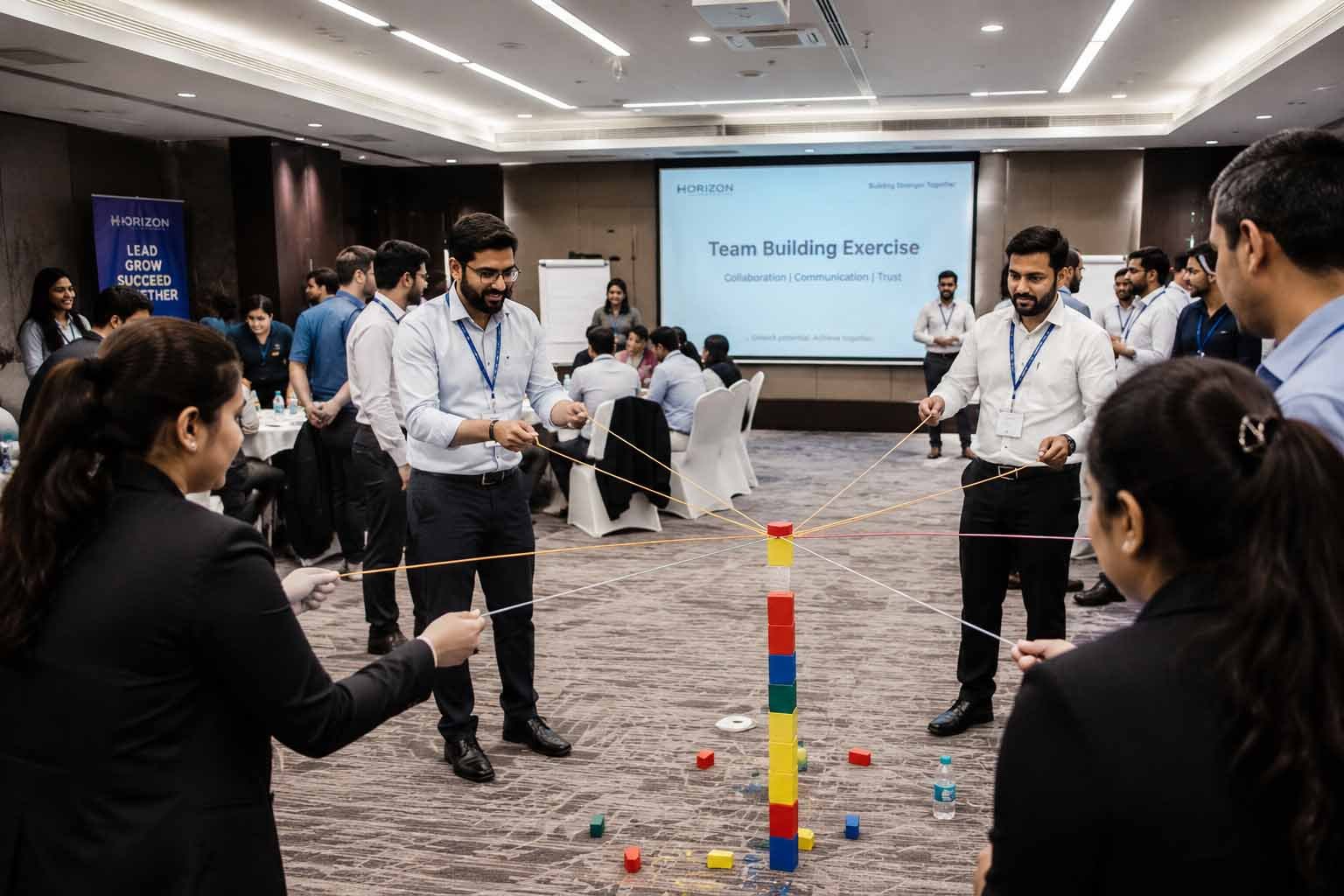

From Subject Expert to High-Impact Trainer: What Truly Drives Trainer Credibility Today

I have a confession to make. Early in my training career, I talked too much.
As someone who began as a public speaker, I carried that identity into the training room. I spoke from the first second to the last, filling every moment with content, stories, and insights. I believed this was what audiences wanted, and what clients were paying for. After all, they had hired an expert. Surely my job was to share everything I knew.
It took a train-the-trainer program to show me how wrong I was.
The realization was uncomfortable—but transforming. Knowing a subject deeply and helping others learn it are two different skills. I had been showing off my expertise, not facilitating participants’ learning. And in doing so, my training has minimal impact or no impact.
This is the transition many trainers haven’t made—from subject expert to high-impact trainer. It is also, I believe, the main challenge of trainer credibility today.
The Three Gaps
In the years since that realization, I have observed hundreds of trainers. Many are brilliant in their fields—deeply knowledgeable, accomplished, respected. Yet something is missing when they step into the training room.
The first gap is design. Many subject experts have valuable knowledge but do not know how to turn it into a training program. They can explain what they know, but they have not learned how to structure that knowledge for adult learners—how to sequence it, how to make it stick, how to design for application rather than information transfer.
The second gap is delivery. Even when experts create a formal course, it often becomes a lecture in disguise. Slides replace conversation. Content crowds out interaction. The trainer talks, participants listen. The result may be informative, but it is rarely transformative.
The third gap is facilitation. The ability to hold a room—to read energy, invite participation, navigate resistance, and create space for genuine learning—is a skill set most subject experts were not taught. We assume that if we know enough, the teaching will take care of itself. But it doesn’t.
These three gaps explain why so many knowledgeable trainers struggle to create impact. Expertise opens the door, but it cannot carry the room.
Rethinking Credibility
Here is what I have come to understand: trainer credibility is not primarily about what you know. It is about what happens in the room because you are in it.
Participants are not asking, “Does this trainer know enough?” They are asking, “Can this trainer help me learn? Will I leave this room different from how I entered?”
This shift in perspective changes everything.
Credibility through relevance. Participants need to feel that you understand their world—not the textbook version, but the version with budget pressures, resistant colleagues, and imperfect systems. When a trainer speaks to that reality, something shifts. The audience stops evaluating and starts engaging.
Credibility through transformation. High-impact trainers design backwards. They start with a different question: What should participants be able to do differently after this session? Not just what they should know, but what they should actually do. This distinction separates trainers who inform from trainers who transform.
Credibility through presence. This is the hardest to teach but the easiest to recognize. It is the trainer’s ability to be fully in the room—to adapt when energy drops, to welcome challenge without defensiveness, to hold silence without rushing to fill it. Presence signals that learning, not performance, is the priority.
Expertise supports all three dimensions of credibility, but it cannot substitute for any of them.
The Identity Shift
What makes this transition difficult is that it requires more than new skills. It requires a new identity.
Subject experts are trained to provide answers. Effective trainers learn to ask better questions—and sit with them long enough for them to think. Experts prove value through depth of knowledge. High-impact trainers prove value through the quality of learning they enable. Moving from one orientation to the other can feel like giving something up—like admitting that expertise alone is not enough.
I remember my own resistance. As a speaker, I had built my reputation on the quality of my content and my ability to hold attention. The idea of talking less felt like diminishing my value. What I discovered was the opposite: when I created more space for participants to think, discuss, and practice, the learning deepened. My authority did not shrink; it expanded into a different form.
This is the reframe our industry needs. We are not asking subject experts to become less knowledgeable. We are asking them to also become knowledgeable about learning itself—to evolve from trainers into what I call transformation architects.
Implications for Practice
What does this mean for trainers navigating this transition?
Audit your airtime. In your next session, notice how much time you spend talking versus how much time participants spend doing. If the ratio is heavily skewed toward your voice, consider what could be redesigned. Adult learning research is clear: retention comes from doing, not from listening.
Learn to design, not just deliver. If you have never studied instructional design, start. Understanding how adults learn—how to sequence content, build engagement, and design for application—is not optional for high-impact trainers. It is foundational.
Seek feedback on facilitation, not just content. After a session, we typically ask whether the content was useful. Fewer of us ask: Did I create space for people to think? Did I adapt when the room needed something different? These questions are harder to answer but important for trainer growth.
Embrace the discomfort of silence. The most credible trainers I know are comfortable with pauses. They ask a question and wait. They let participants struggle toward insight rather than rushing to rescue them with answers. This is not passivity; it is disciplined facilitation.
A Different Kind of Authority
The transition from subject expert to high-impact trainer is not a step down. It is an expansion.
We do not abandon expertise; we build upon it. We add the ability to design learning experiences that stick, to facilitate conversations that shift thinking, to create spaces where transformation happens.
In a world where information is abundant and attention is scarce, this is where credibility lives. Not in what we know, but in what we help others become.
The trainers who understand this are no longer simply delivering content. They are architecting transformation—one session, one conversation, one shifted perspective at a time.
And that is the kind of authority worth building.