
Leading When the Rules Are Changing: Power, Pressure & Decision-Making in Uncertain Times
In periods of stability, leadership often follows established playbooks. In periods of transition, those playbooks begin to fail. Rules shift, expectations evolve, and leaders are required to make decisions without the comfort of precedent or certainty.
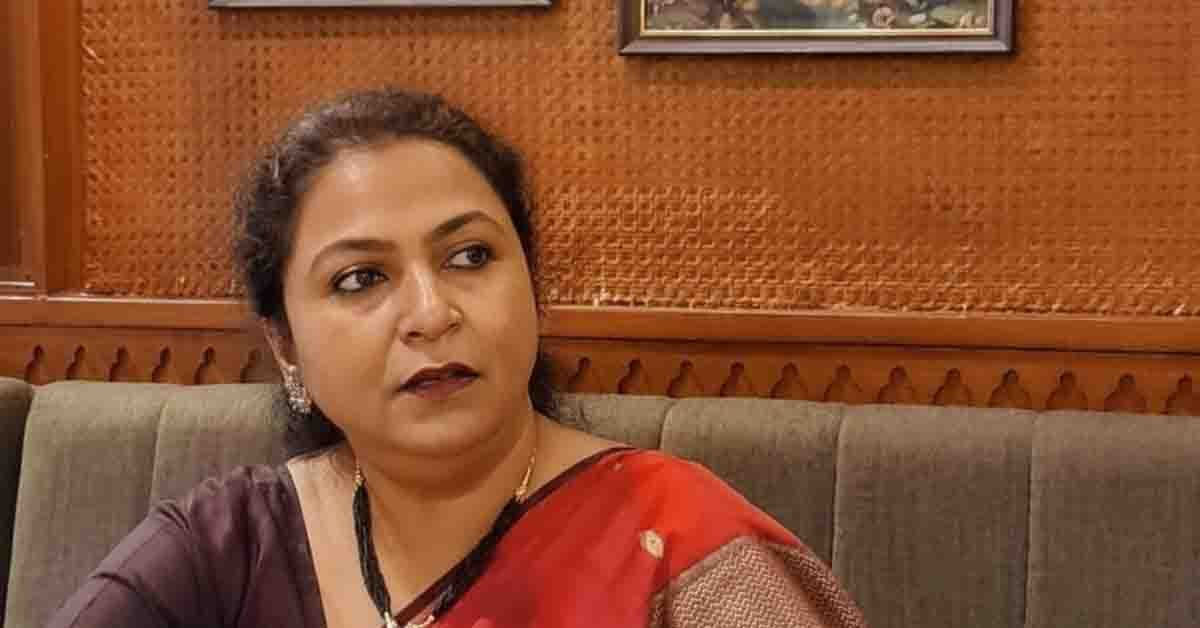
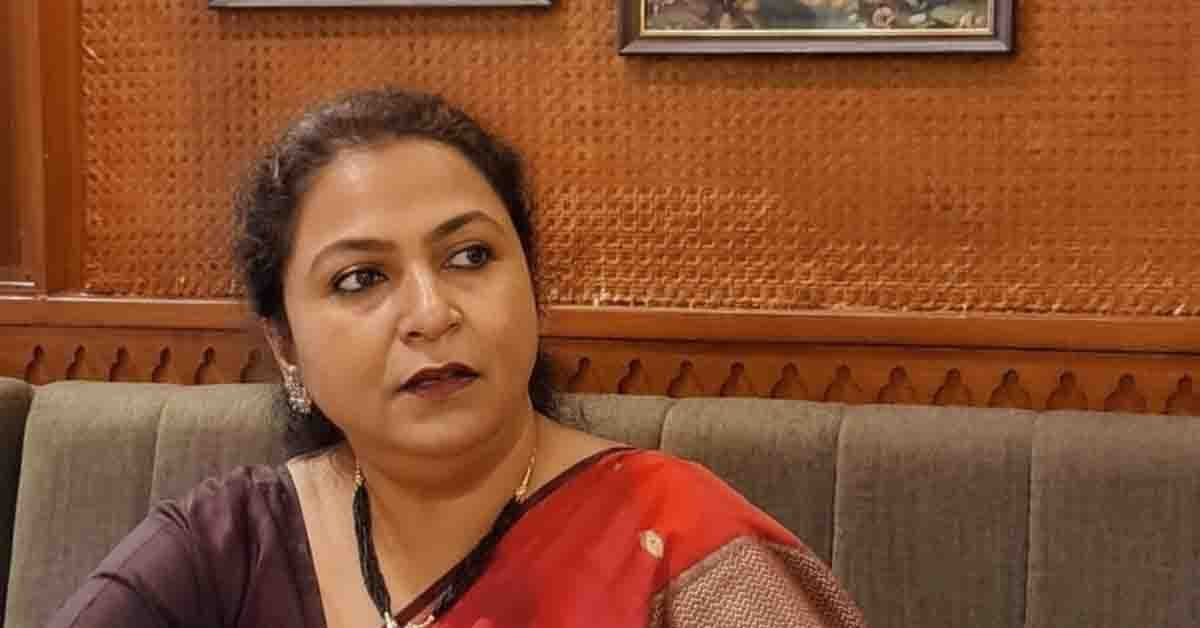
In this candid interview with Ipsita Choudhury, Global Excellence Digest explores what it means to lead when authority is no longer absolute, performance pressures are constant, and clarity must be created rather than inherited. Drawing from her experience across education leadership and institutional management, Ipsita reflects on how power is exercised when structures are in flux — and how leaders remain anchored when outcomes matter deeply.
The conversation moves beyond theory to the lived realities of leadership: navigating accountability, balancing people and performance, and making decisions that carry long-term consequences in environments shaped by policy change, stakeholder expectations, and evolving definitions of success.
At its core, this dialogue examines a central question facing leaders today: how do you hold influence and credibility when the rules are still being written? Ipsita’s insights offer a grounded perspective on decision-making under pressure — one that values judgment, integrity, and adaptability over rigid control.
This interview forms part of Global Excellence Digest’s March 2026 edition, themed “Leadership in Transition: Power, Purpose & Transformation,” and reflects the kind of leadership conversations needed in uncertain times — honest, reflective, and deeply human.
influence and credibility when the rules are still being written? Ipsita’s insights offer a grounded perspective on decision-making under pressure — one that values judgment, integrity, and adaptability over rigid control.
This interview forms part of Global Excellence Digest’s March 2026 edition, themed “Leadership in Transition: Power, Purpose & Transformation,” and reflects the kind of leadership conversations needed in uncertain times — honest, reflective, and deeply human.
Q: You have led educational institutions through periods of changing policies and expectations. What leadership capabilities have become most critical during such transitions?
A: One capability that has helped me the most during periods of change is my ability to read and read deeply. I read voraciously about policy shifts, emerging expectations, and related developments, and then take time to truly comprehend and organise that information around key questions. Over the years, I’ve learnt to sift through reams of data fairly quickly; separating what is being discussed on paper from what is actually feasible on the ground, what truly needs to be done, and what the possible outcomes might be.
The next critical capability is the ability to translate understanding into action. I believe strongly in creating clear implementation plans, right from the macro vision to the micro details. This stage is never a solo exercise. It involves bringing the implementers- educators, coaches, counsellors- onto the discussion table and jointly chalking out a step-by-step plan of action. When people are part of the thinking, execution becomes far more meaningful.
Listening has also played a significant role in my leadership journey. I listen carefully, take feedback from all stakeholders, and then make informed decisions about what is applicable and what is not in a given context. I would describe myself as someone who carries immense calm in my professional arena, though, like most people, I may overthink later.
Professionally, however, I do not rise to baits or provocations; steadiness matters, especially during uncertainty. Finally, perseverance is my watchword. I do not give up easily. I continue the work even in the face of stiff opposition or seemingly insurmountable challenges. Change, I have learnt, rarely unfolds smoothly but staying the course often makes all the difference.
Q: How do you approach decision-making when there is no clear precedent or established framework to rely on?
A: When there is no clear precedent or established framework, my decision-making is guided by a few constant anchors: the management’s expectations, the school’s vision and mission, our short- and long-term goals, and the student community we serve. These provide direction even when the path itself is unclear. Context then determines the nature of the decision. Am I responding to an immediate situation-; a crisis or sudden disruption or making a choice with longer-term implications? While schools do have systems for most scenarios, there are always moments that fall outside precedent and demand judgment rather than procedure. In such situations, two principles shape my leadership philosophy: student and staff welfare, and the school’s credibility. I believe people matter more than systems. I consistently ask myself what is most beneficial for those involved and what safeguards the institution’s integrity. When there is a real choice, I will always prioritise human welfare over rigid compliance. When no framework exists, I follow a disciplined but flexible process, gather relevant information through focused reading and research, while consciously avoiding information overload. I then identify two or three realistic alternatives- never more, and choose the one best aligned with the situation and the school’s values. Implementation follows swiftly, and outcomes are reviewed.
I place strong faith in pilot studies. Testing decisions on a small scale reflects my belief that leadership is not about certainty, but about learning quickly, understanding what works, what doesn’t, and refining the path forward.
Q: In your experience, where do leaders most often struggle when rules or systems change?
A: In my experience, leaders struggle most at two points when rules or systems change: understanding the intent of the change and implementing it meaningfully. A telling example is the introduction of the Continuous and Comprehensive Evaluation (CCE) system by the Central Board of Secondary Education. While the intent was progressive, the rollout was abrupt. Most schools had little training or preparation before implementation began. The challenge was especially severe in Tier 2 and Tier 3 towns and in rural or remote areas. With limited mentoring and support, leaders were left to interpret the policy independently. The result was uneven and often superficial implementation, including mechanical score generation without adequate evidence. This continued for several years, and just as schools were beginning to find their footing, CCE was withdrawn and replaced with a tweaked version of the traditional assessment system. What was missing were critical leadership conversations. Could key learnings have been retained, especially at the elementary level, with more time, flexibility, and consultation? And could leaders from smaller towns and hinterlands have been consulted before and during implementation?
This is where leadership support becomes crucial. As I’ve learnt over the years, policies cannot remain at the level of manuals and circulars. Leaders need guidance and training right down to classroom practice. Systems must serve people, not overwhelm them. After all, we are not merely teaching subjects, we are shaping learners. And during change, leadership must keep that truth firmly at the centre.
Q: How do you balance regulatory compliance with preserving institutional culture and values?
A: Regulatory compliance plays an important role in school operations but largely in the documentation of processes rather than in the everyday life of the school. Affiliated schools- whether under CBSE, CISCE, or State Boards- are expected to record and report processes exactly as prescribed, and that is a non-negotiable responsibility. However, when it comes to academic compliance, achieving 100 percent alignment is neither realistic nor always desirable. There are several reasons for this. Many schools simply do not have the bandwidth to conduct every course, module, event, observation, or activity exactly as laid down by regulatory authorities. India’s vast geographical and demographic diversity also means that schools must adapt central guidelines to state-specific contexts. What works in one region may need modification in another. Schools are also careful to remain inclusive and secular; as social realities require thoughtful balancing. Added to this are practical constraints; working days and actual teaching days are often affected by weather conditions, state holidays, or such. That said, schools founded by educationists, philanthropists, or through CSR initiatives are often deeply anchored in their vision, mission, and values. These institutions tend to guard their culture closely, ensuring that compliance does not dilute what they stand for. Management expectations, on the other hand, are frequently driven by numbers—admissions, financial sustainability, teacher recruitment and retention, training costs, and capital expenditure. Privately funded schools, in particular, cannot function without a basic profit model; sustainability and growth depend on it. This is where vision and mission play a crucial role. They guide management decisions so that the economics of the institution support—not overshadow—the school’s cultural and educational purpose.
In my experience, the balance lies in this alignment: meeting regulatory requirements with integrity, while allowing institutional values to shape how those requirements are interpreted and lived out. Compliance may provide the structure, but culture gives the school its identity and effective leadership must hold both together.
Q: What role does ethical leadership play when leaders face pressure to deliver measurable outcomes?
A: I believe ethics are shaped very early in life, at home, during the most impressionable years. Children absorb far more than we realise. They hear the lies, exaggerations, the half-truths and eventually learn to decode them. Nothing is truly hidden from children. Those early years lay the foundation of one’s ethical framework, and the opposite, of course, is equally true.
As we grow, life experiences either strengthen or weaken that ethical core. By the time we step into leadership roles, we bring that moral compass into the workplace with us. From a leadership perspective, pressure is inevitable, whether outcomes are measured or not. So, the question is not whether there is pressure, but how one responds to it. I do not believe in fudging outcomes. I follow a personal code of conduct that is deeply ingrained, and I regularly ask myself simple questions: How would I like to be treated? Am I being fair and transparent? Would I be comfortable if this decision were made public? Giving in at the first sign of pressure is, in my view, a sign of weakness and I do not consider myself weak. Crises and pressure, if handled with integrity, make leaders stronger and wiser. My experience across schools in different parts of the country has taught me one enduring lesson: persevere, no matter what.
Q: What leadership lessons from education do you believe are most relevant to other sectors navigating disruption?
A: Many leadership lessons from education translate seamlessly across sectors, especially in times of disruption. First, the habit of reading daily, no matter how busy one is. Reading builds perspective and strengthens the inner core of a leader.
Second, observation skills. Education trains you to notice what is not being said, to read the room, understand silent dynamics, and respond thoughtfully rather than reactively. Third, the ability to truly listen. Not to reply, not to defend but to listen with intent and attention. Another crucial lesson is giving feedback based on data, not opinions. Begin with what is working, and then offer clear, actionable suggestions for improvement. This builds trust while maintaining accountability. Some other enduring lessons from education include avoiding silos because information, when shared responsibly, is power; leading by example; practising empathy with direction, respecting timelines. These principles may sound simple, but in turbulent times, they are often what separate resilient leaders from reactive ones.
Q: Looking ahead, what mindsets or practices should emerging leaders unlearn to lead more effectively?
A: Emerging leaders, in my view, need to first unlearn overdependence on people, on systems, or on constant guidance. Information is widely available today; what matters is staying alert, proactive, and willing to work through the details. Reading, remains non-negotiable. Another habit to unlearn is leading without understanding how the organisation truly functions. Leaders who lack hands-on exposure to different departments often get caught off guard. The sooner one understands finance, examinations, HR, or operations, the better. You don’t want to be surprised or misled, simply because you never stepped into those spaces. Meticulous planning is another practice I strongly believe in. The old saying still holds true: if you fail to plan, you are planning to fail. Throughout my career, I have maintained planners, updated timelines, and worked with adequate margins. This discipline has served me well, especially during periods of uncertainty.
Emerging leaders should also actively seek exposure through trainings, workshops, institutional visits, and new technologies and then bring back the best practices for thoughtful implementation. At the same time, they must unlearn the urge to do too much at once. Launching multiple initiatives simultaneously can be overwhelming and often dilutes impact. Pilot first, learn quickly, and then scale. Finally, find a mentor- someone who has walked the path, made the mistakes, and emerged wiser. Leadership is not about having all the answers; it is about knowing where to seek guidance while steadily building your own judgment.