
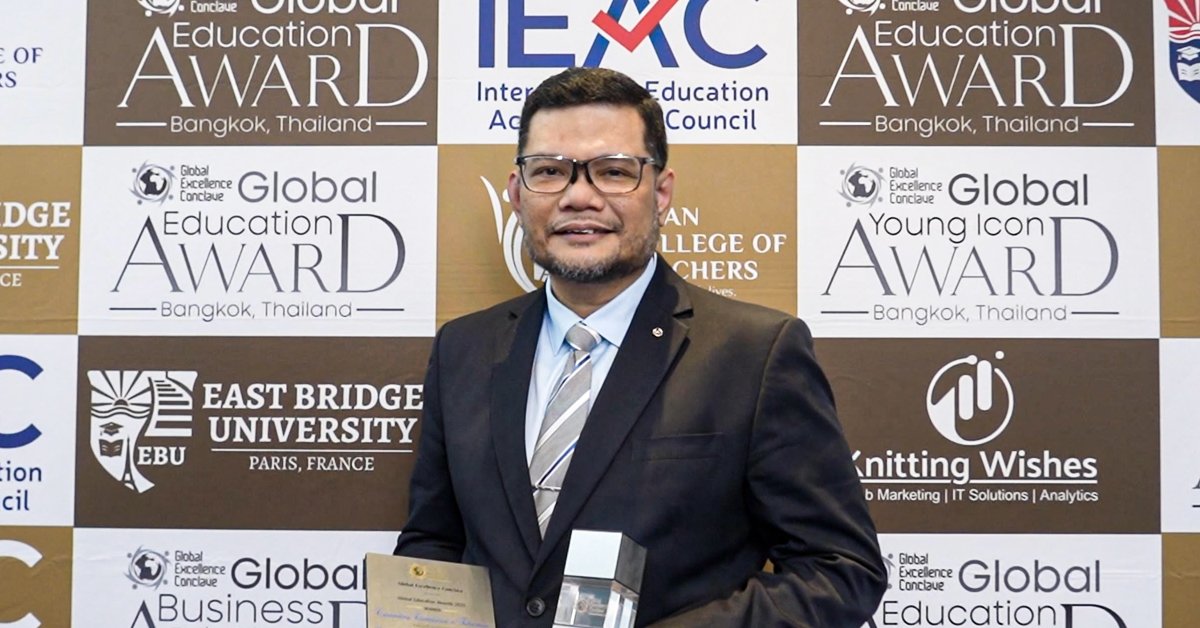
Transformative Leadership: From Philosophy to Impact
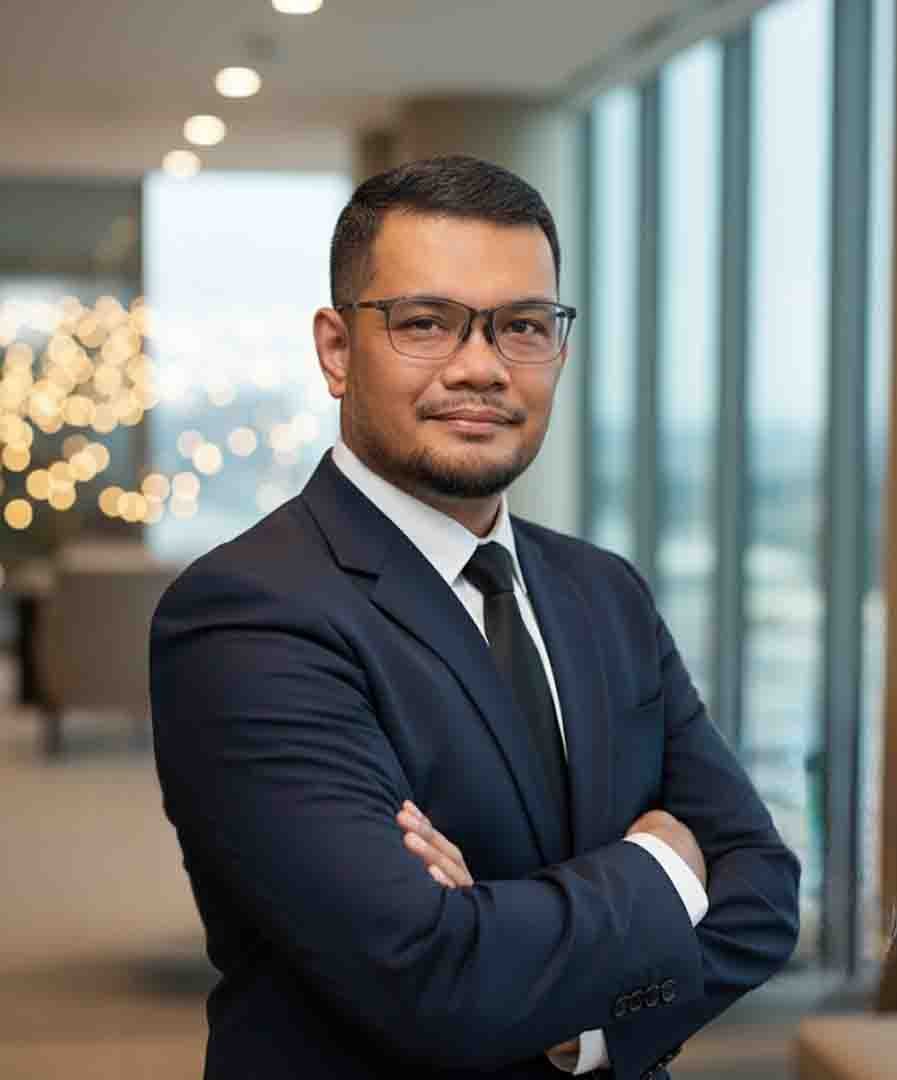
At a time when leadership is often measured by titles, metrics, and outcomes, Dr. Firoze Ismail offers a refreshing and deeply human perspective—one rooted in belief, service, integrity, and courage. With over two decades of experience spanning corporate leadership, education, coaching, and applied communication, his journey reflects a rare ability to translate philosophy into measurable impact.
In this candid conversation, Global Excellence Digest (GED) speaks with Dr. Firoze Ismail about his evolution from boardrooms to classrooms, his commitment to servant-leadership and cognitive empathy, and the systems he has built to scale meaningful transformation across institutions and individuals. From fostering psychological safety to cultivating leadership cultures grounded in trust, he shares insights shaped by lived experience rather than theory alone. What follows is a thoughtful exchange on Transformative Leadership: From Philosophy to Impact—one that challenges conventional notions of success and redefines leadership as deeply human work.
Q. Your journey spans over two decades across corporate boardrooms and classrooms, shaped by the belief that “organizations don’t drive excellence; people do.” How did your corporate leadership experiences shape your understanding of transformative leadership, and what prompted your conscious pivot from performance-driven roles to purpose-driven education?
A: My leadership philosophy is anchored in one fundamental truth. And that is “Organisations don’t drive excellence; people do”.
An organisation, by definition, is a construct. A static framework of policies and legalities. It cannot innovate, it cannot show resilience and cannot learn. It is only the people within that construct that can do those things. This understanding didn’t come from a textbook but rather from straddling two worlds. For years, I held full-time corporate leadership roles while simultaneously lecturing and teaching part-time. Driven by the pure passion for education. This dual existence was eyeopening.
In the corporate scene, I operated in a world of Transactional Leadership; managing compliance and optimising systems to hit targets. But in the lecture halls and classrooms, I witnessed something deeper. Transformation. My stint in education revealed that when you focus on the individual; especially when you ignite their curiosity and belief, performance became a natural by-product. I realised that my corporate strategies were often trying to extract performance, whereas my teaching was building capacity. This contrast crystallised my understanding of Transformational Leadership. I saw that true excellence required Individualised Consideration and Intellectual Stimulation, elements often missing in rigid corporate structures.
The conscious pivot therefore wasn’t about abandoning performance but rather about realigning my focus. I realised that performance is actually a lagging indicator of purpose. I chose to commit fully to education not to escape the corporate demand for results, but rather to prove that purpose is the ultimate driver of those results. I brought the discipline of performance into the service of purpose, ensuring that we aren’t just meeting KPIs, but structurally modifying how people think and lead.
Q. You describe your leadership philosophy as rooted in servant-leadership, empathy, integrity, and courage. How do these values translate into everyday leadership decisions, especially when leading educators, coaches, and learners in high-pressure performance environments?
A: To me, these values are not abstract ideals. They are the practical tools I use to navigate the complexities of my dual roles. Take my position as the Chairman of the Lifestyle and Enrichment Branch and Exco at NICA (National Instructors and Coaches Association). Here, integrity and courage are paramount. We represent a diverse ecosystem of freelancers, coaches, and instructors where leadership decisions will involve difficult conversations; advocating for fair practices, pushing for professional recognition, or mediating disputes. Courage here doesn’t mean being the loudest voice; it means having the moral fortitude to stand up for the ‘invisible’ workforce and ensuring that our decisions protect and enhance their livelihoods and dignity.
Conversely, my role as Chair of the SG Feuerstein Cognitive Coaching Community of Practice demands a different application of these values. Specifically, cognitive empathy and servant-leadership. With me in this community are fellow leaders, experts and practitioners. I don’t lead by decree. I lead by service. Servant-leadership here translates to removing the obstacles that could hinder their growth, and facilitate platforms that enhance and develops their professionalism and eventually their growth. My decision making process remains clear with the ethos; “Am I creating a platform for them to shine, or am I hoarding the spotlight?”
When I apply cognitive empathy in this space, I am not just sympathizing with their challenges. I am actively trying to understanding how they are processing information and where their mediation gaps lie. Whether I’m guiding a debate coach on a strategy, or mentoring a Feuerstein practitioner on a case study, the decision is always the same; prioritise the learner’s growth over the institution’s ego.
In high pressure environments, this philosophy grounds me. When the stakes are high, it is easy to revert to command and control. But I seek to pause and ask; “Does this decision serve the people I lead, or does it just serve the dashboard? By consistently choosing the former, I find that we build not just high performing teams, but resilient communities.
Q: As Chairman of the Lifestyle and Enrichment Branch at NICA and Founder of the SG Feuerstein Cognitive Coaching Community of Practice, you emphasize psychological safety and cognitive empathy. Why do you believe these humancentered elements are critical for sustainable leadership and learning in today’s fast-changing educational landscape?
A: If we go by my philosophy earlier that organisations don’t drive excellence, people do, then the fundamental duty of a leader is to create the conditions where people can actually function at their peak. This is where psychological safety and cognitive empathy become non-negotiable strategic assets, and not just soft-skills.
In my work with the Cognitive Coaching CoP, we strongly believe in the principle of Structural Cognitive Modifiability; where intelligence is not fixed but can grow. However, neuroscience tells us that the brain effectively “locks down” in a state of threat. It prioritizes survival over learning. Therefore, psychological safety is the bedrock of neuroplasticity. If I want my team or students to innovate and adapt to this fast changing landscape, I must first ensure they feel safe enough to fail. Without safety, there is no modifiability; there is only stagnation.
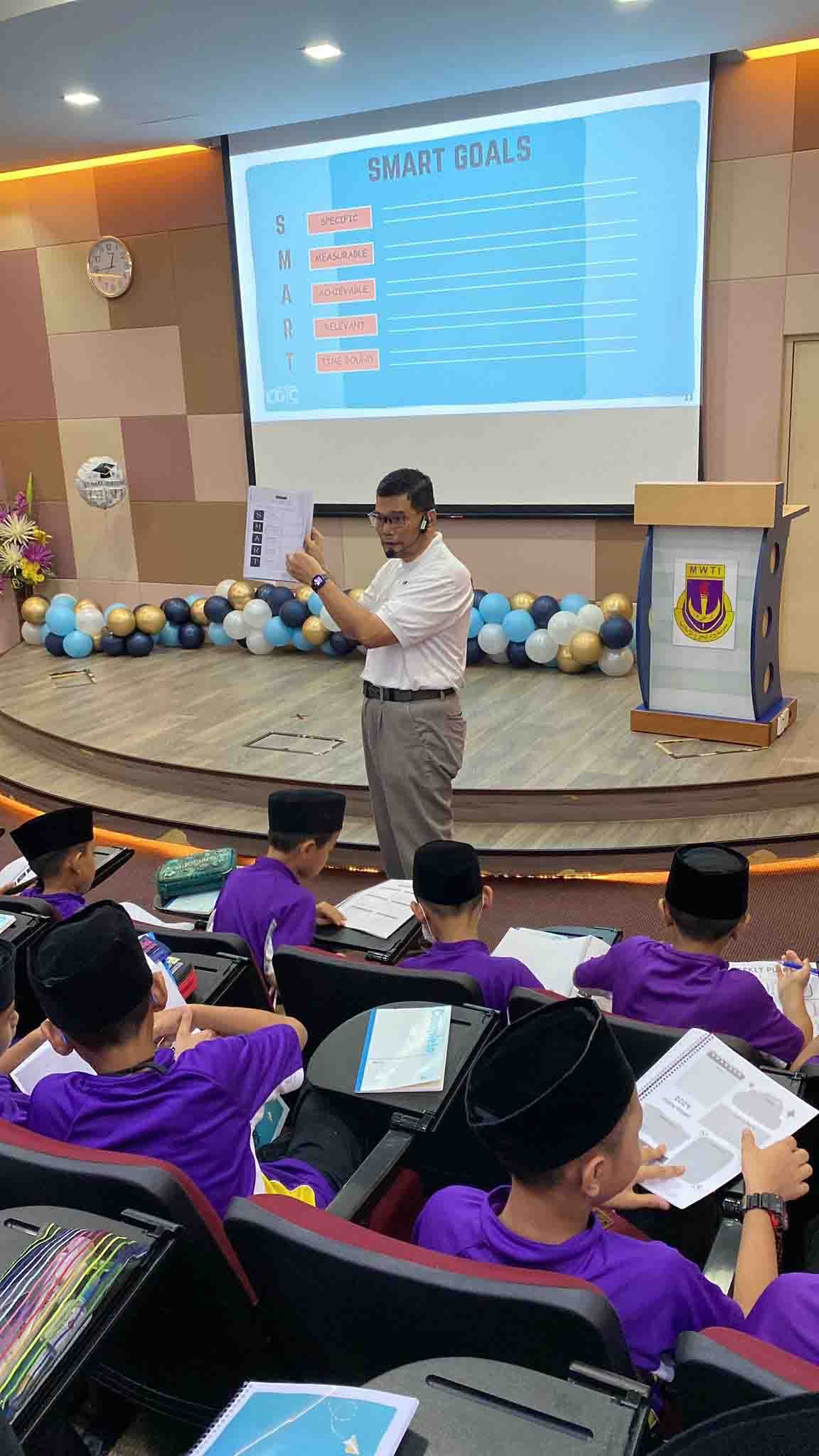
At NICA, I see the other side of this coin. Our coaches and freelancers operate in a volatile gig economy. For them, ‘sustainability’ isn’t a corporate buzzword; its their livelihood. When leading lacks cognitive empathy; the ability to understand how another person processes information and experiences pressure, we end up with a disconnect. Leaders shout instructions, but the workforce is too paralysed by anxiety to process them.
Cognitive empathy allows us to bridge that gap. It moves us from demanding output to mediating barriers. In a rapidly changing world, the leaders who last won’t be the ones with the firmest grip but the ones who can unlock the cognitive bandwidth of their people to solve problems creatively. And that is why human-centered elements are critical… they are the only way to turn human capital into human capability.
Q. At MindSpeak Logic, your philosophy has translated into measurable outcomes, including hundreds of “Best Speaker” awards and recognition. How do you ensure that leadership philosophy does not remain aspirational, but is operationalized into real, scalable impact across institutions and individuals?
A: Philosophy without process is just poetry. At MindSpeak Logic, we operationalise our values through rigorous scaffolding. We don’t just tell a student to “be confident”, we provide the specific coaching tools to construct that confidence.
We treat communication not as a ‘soft-skill’ but as a system of logic and empathy. Whether I’m coaching leaders on a speech or a school student for a debate, the methodology is the same; assess the current situation, mediate the learning gap, and provide the tools for self-regulation.
Scalability comes from structure. We have codified the “art of persuasion” into a teachable science. By focusing on the process of learning; how to think, how to analyse, how to listen, the outcomes (the accolades and trophies) takes care of themselves. We ensure impact by measuring not just the win, but the transformation of the learner’s thinking process.
Q: Receiving the Doctor of Excellence in Educational Leadership and multiple honors at the Global Education Awards 2025 marked a significant milestone. How do you view recognition in the context of leadership responsibility, and what obligations do such honors place on leaders shaping future generations?
A: I view these honors; the Doctorate, the Edupreneur of the Year, and the awards for Contribution to Education and Excellence in CCA, not as a finish line but rather as a platform. Recognition is like a magnifying glass; it amplifies your voice and the real question is, “What will you say with that volume?”
These accolades place a heavy obligation on me to advance for those on the margins. The obligation is to ‘lift as we climb’. It compels me to mentor the next generation of educators and to ensure that the standards that we have set are not just maintained, but democratised. We must ensure that quality education and cognitive coaching are accessible, not just for the elite, but to every learner who needs to unlock their potential.
Q: Across corporate, education, and coaching ecosystems, you have witnessed both high performance and systemic failure. What are the most common leadership blind spots you see today, and how can leaders consciously correct them before they erode trust and culture?
A: I would say that the most dangerous blind spot is the “Expert Trap”, which is the belief that because you are the leader, you must have all the answers. When leaders fall into this trap, they stop listening to the ‘quiet signals’ from the ground. They confuse compliance with alignment. This inevitably leads to systemic failure because the leader is operating on a map that no longer matches the territory. To correct this, leaders can move beyond standard feedback and practice humble inquiry. Unlike rhetorical questioning; which is often a trap to prove a point, humble inquiry is the art of asking questions to which you truly do not know the answer. It requires a conscious pivot from telling to asking. Instead of commanding a solution, a transformational leader asks, “What am I missing here?” or “What is the threat you see that I don’t?” Additionally, it would be good to also practice double-loop learning. When leaders see a mistake and fix the action, that is single-loop learning. On the other hand, double-loop learning asks us to question the underlying beliefs that led to the mistake in the first place. Finally, we cannot correct blind spots in a vacuum. We need to surround ourselves with what I call a Challenge Network. This is the group of people who value the mission more than they fear our title. When we make it safe for this network to challenge our assumptions, we effectively outsource our eyes to cover our blind spots. That is how we protect culture. By not being perfect but being transparently imperfect and committed to growth.
Q: Looking ahead, as education increasingly demands ethical leadership, applied communication, and impact at scale, what advice would you offer to emerging leaders who want to lead with integrity while navigating complexity, resistance, and constant change?
A: My advice is simple. Anchor yourself in your Why; but be flexible in your How. Complexity and change are inevitable. If leadership is built only on techniques or trends, you will be swept away. But if your leadership is built on values such as integrity, service and a genuine belief in human potential, you will remain grounded.
Resistance is often just a request for clarity or safety, So don’t fear it. Engage with it. Learn to communicate, not just to persuade but to connect. And remember that true legacy is not what you built but about who you built up. If you focus on serving the people you lead, you will find that you are able to navigate even the most complex storms with clarity and purpose.