
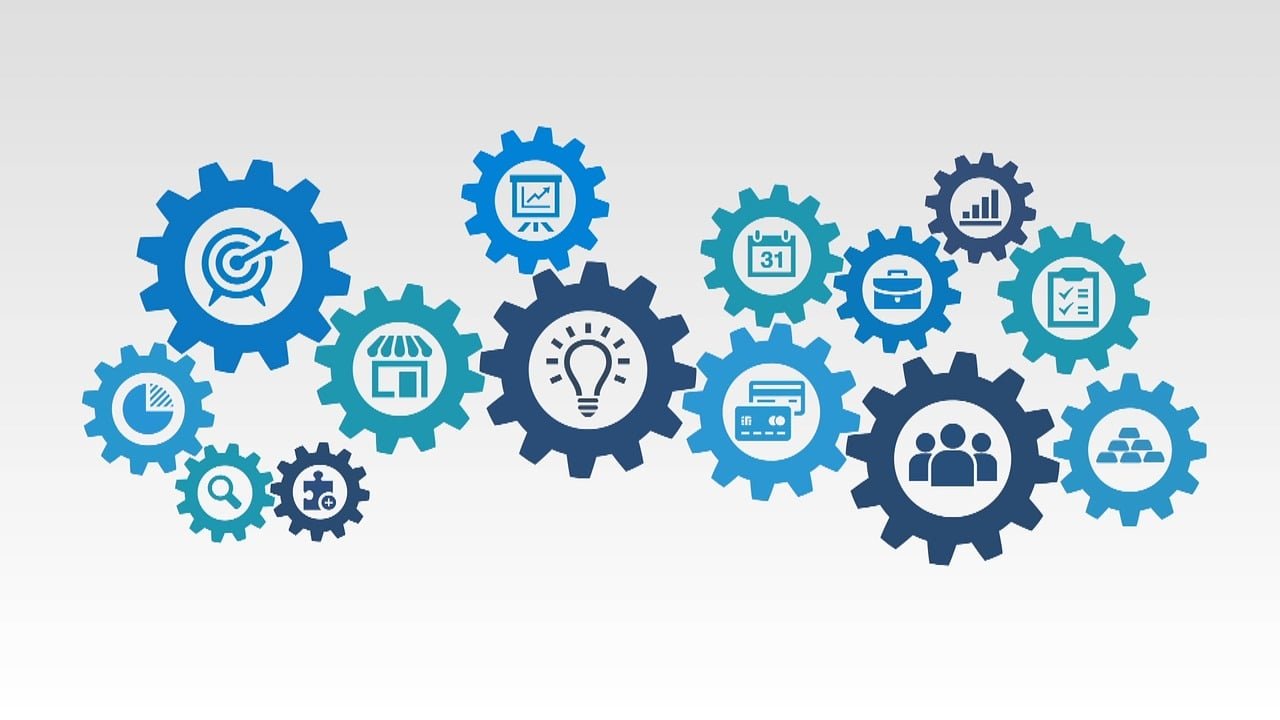
Orchestrating Advantage: The Strategic Alignment of Assets, Ecosystems, and Enterprise Value

Many companies possess valuable assets. Few know how to orchestrate them.
In today’s ecosystem-driven economy, competitive advantage rarely emerges from asset ownership alone. It is built through alignment — the deliberate integration of capabilities, partnerships, governance systems, and monetisation models. The difference between resource abundance and enterprise value lies in orchestration.
Operational excellence, therefore, is no longer about efficiency in isolation. It is about systemic coherence.
Complementary asset alignment requires leaders to think beyond silos. Technology investments must reinforce strategic positioning. Human capital must align with innovation priorities. Partnerships must extend—not dilute—core capabilities. This alignment is often shaped by cognitive framing at the executive level, because how leaders interpret opportunity determines which assets are prioritised.
Execution begins with interpretation.
Internally, orchestration requires what may be described as capability integration discipline—ensuring that product, marketing, operations, compliance, and finance operate as a cohesive system. Externally, it demands ecosystem positioning clarity—understanding where the firm sits within a broader network of suppliers, regulators, collaborators, and competitors.
But orchestration without monetisation logic creates value leakage. Asset alignment must ultimately reinforce the firm’s revenue architecture and IP governance strategy. Without structured value capture mechanisms, ecosystem strength may benefit others more than the originator.
This is why operational excellence increasingly intersects with governance oversight.
Boards are now evaluating not just financial metrics, but strategic coherence. Fragmented enterprises struggle to scale innovation. Aligned enterprises compound advantage. The question leaders must ask is not “Do we have strong assets?” but “Do our assets amplify each other?”
For responsible enterprises, alignment also carries ethical weight. Sustainability commitments, regulatory compliance, and stakeholder accountability must be integrated into operational design. True orchestration embeds environmental, social, and governance considerations into core systems rather than layering them as external obligations. This connects directly with our exploration of ethical considerations in value extraction.
Operational excellence in the modern enterprise is therefore a multi-layered discipline:
• Internal capability alignment
• Ecosystem integration
• Governance-enabled value capture
• Stakeholder-consistent design
Entrepreneurs, too, must think orchestrationally. High-growth ventures that build complementary partnerships early create defensibility faster. Scalable growth models increasingly rely on platform-based ecosystem strategy, rather than isolated product development.
As competition shifts from firm-versus-firm to system-versus-system, orchestration becomes the defining operational advantage.
Because in complex markets, advantage is rarely accidental. It is composed, integrated, and conducted — like a symphony.
Image by https://persona.style/