Robotics Is Moving Beyond Manufacturing — Here’s Where It’s Going Next

The future of robotics is expanding beyond factory floors into healthcare, logistics, infrastructure, and intelligent service ecosystems.

Robotics Is Moving Beyond Manufacturing — Here’s Where It’s Going Next

Author

Editorial Team

Early one morning in a large urban hospital, a small autonomous robot glides through the corridor. It pauses politely at an intersection, waits for a nurse to pass, then continues its route—delivering medicines from the pharmacy to patient wards. No sparks, no robotic arms, no industrial cages. Just a machine doing a mundane but essential task. For decades, this scene would have felt out of place. Robots belonged on factory floors—inside automotive plants, welding metal, assembling electronics at speeds no human could match. That image still dominates how many people think about robotics.

But the reality has shifted.

The future of robotics is no longer defined by assembly lines alone; it is increasingly shaped by cross-sector deployment, AI integration, and the rapid growth of service robotics markets worldwide. What began as industrial automation is now evolving into a cross-sector transformation, reshaping healthcare, logistics, agriculture, education, and service industries.They are no longer confined to controlled industrial environments. They are stepping into messy, unpredictable, human spaces—and learning to operate within them. This raises a timely question for leaders across sectors: where is robotics expanding next, and why does it matter now? Robotics first found its footing in manufacturing for a reason. Factories offered structured environments—repetitive tasks, predictable layouts, and clear safety boundaries. Automotive and electronics industries led the way, using robots to improve precision, speed, and consistency.

What has changed is not just ambition, but feasibility.

Robots today are cheaper to build, easier to deploy, and far more capable. Advances in sensors, computer vision, artificial intelligence, and connectivity have allowed machines to perceive and respond to complex, unstructured environments. Cloud computing enables continuous learning. Better batteries and materials allow robots to operate longer and more safely alongside people. As a result, robotics is moving out of the factory and into the real world.

This article explores the domains where that expansion is already underway—logistics, healthcare, agriculture, construction, homes, and public spaces—and what it signals for the next phase of automation.

Logistics and retail: the first frontier beyond factories

If manufacturing was robotics’ first home, logistics has become its second.

In warehouses and fulfillment centers, robots now move goods, sort packages, and pick items around the clock. Autonomous mobile robots navigate vast spaces, bringing shelves to human workers or handling tasks independently. The result is faster throughput, fewer errors, and facilities designed around machine movement rather than human walking distances.

This shift enables more than efficiency. It supports same-day delivery, smoother peak-season operations, and new warehouse layouts that would be impractical without automation.

Retail environments are following close behind. Robots scan shelves for inventory accuracy, identify pricing errors, and track stock levels in real time. Some move goods from backrooms to shop floors, quietly reshaping store operations.

The store of the future may still look human-centered—but behind the scenes, robots are increasingly doing the heavy lifting.

Healthcare and eldercare: precision meets sensitivity

Hospitals are another unexpected but rapidly growing arena for robotics.

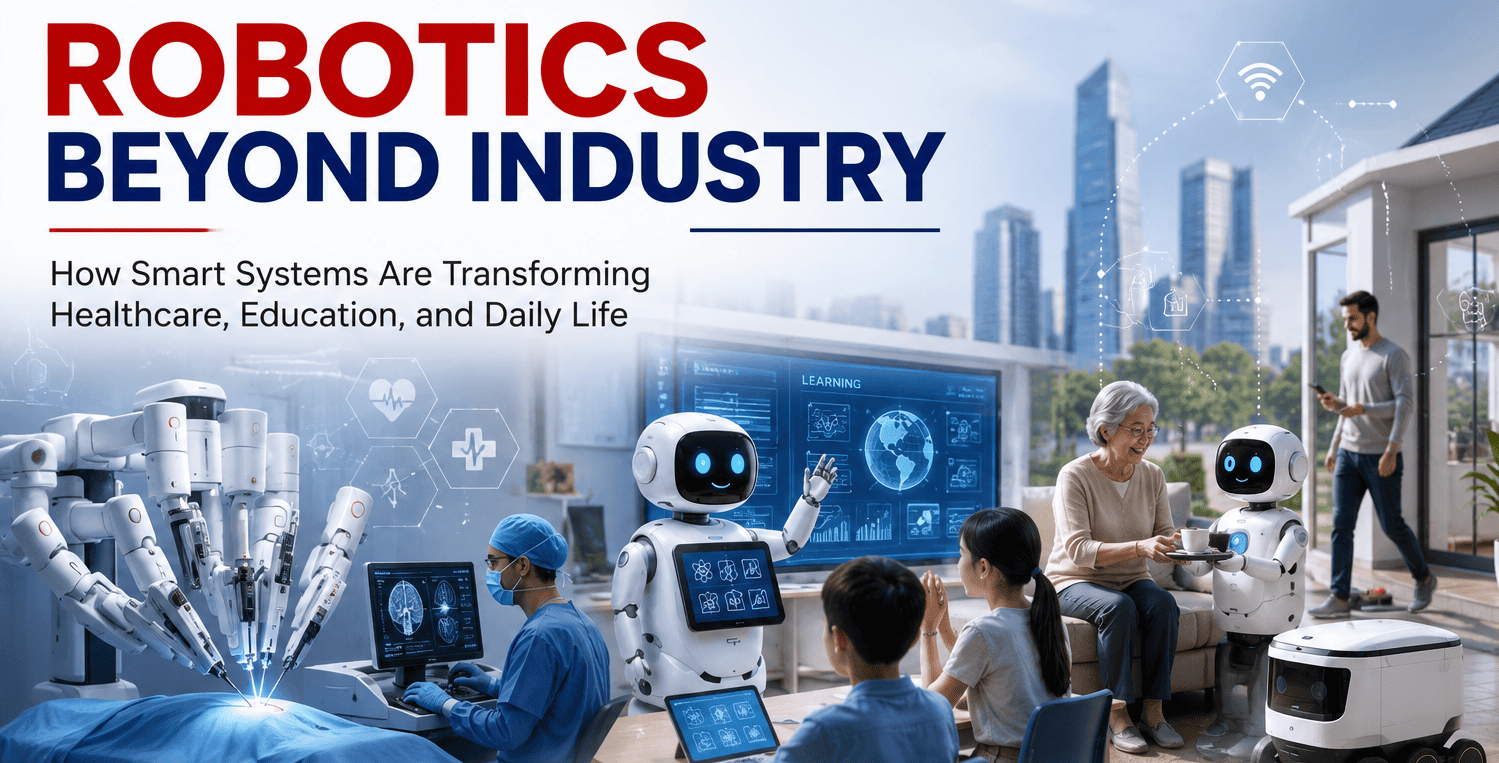
Inside medical facilities, robots transport supplies, deliver meals, disinfect rooms, and enable telepresence for specialists. In operating theatres, robotic systems assist surgeons with precision tasks, enhancing—not replacing—human skill.

Beyond hospitals, robotics is gaining traction in eldercare and rehabilitation. Assistive robots help patients with mobility, therapy exercises, and daily routines. Social robots provide companionship and monitoring, especially in regions facing aging populations and caregiver shortages.

Yet this domain carries tension. Robotics promises improved capacity, safety, and consistency—but also raises concerns about depersonalised care, trust, and human connection. The challenge is not technical alone; it is ethical and emotional.

In healthcare and logistics, collaborative robots (cobots) are increasingly deployed to augment human precision rather than replace it.

Agriculture and food: intelligence in the field

On farms, robots are quietly transforming one of humanity’s oldest industries.

Autonomous machines now plant seeds, remove weeds, spray crops with precision, harvest produce, and monitor plant health. Equipped with sensors and AI, these systems reduce chemical use, improve yields, and address chronic labor shortages.

This shift matters not just for productivity, but for sustainability. Precision agriculture allows farmers to do more with less—less water, fewer inputs, and reduced environmental impact.

The influence extends along the food chain. Robots are increasingly used in food processing facilities, handling and packaging goods. In some restaurants and commercial kitchens, robotic systems assist with repetitive cooking and preparation tasks.

From field to fork, robotics is becoming part of how food is grown, processed, and delivered.

Construction, inspection, and hazardous work

Construction sites are another environment once considered too chaotic for robots. That assumption is changing.

Robots now assist with bricklaying, surveying, heavy lifting, and even 3D printing of structural components. Autonomous systems inspect bridges, pipelines, power plants, and industrial facilities—reaching places that are dangerous, dirty, or difficult for humans.

In these contexts, robotics is not about replacing skilled workers, but about removing people from high-risk tasks. The classic “dirty, dull, and dangerous” jobs are increasingly delegated to machines, allowing humans to focus on supervision, problem-solving, and craftsmanship.

This shift has implications for safety, insurance, and workforce design—especially in industries where risk has long been accepted as inevitable.

Homes and everyday life

For most people, the most familiar robots are domestic ones. Vacuum cleaners and lawn-mowing robots are already mainstream in many households.

But the next generation of home robots aims to do more.

Advances in design, softer materials, and intuitive interfaces are making robots feel less industrial and more approachable. Developers are experimenting with multi-purpose assistants that can support household tasks, monitor safety, or assist elderly residents.

As robots become more capable and trusted in private spaces, expectations around domestic labor, convenience, and safety may shift—much as smartphones reshaped daily life without much fanfare.

Cobots, humanoids, and the rise of “physical AI”

One of the most significant developments in robotics is collaboration.

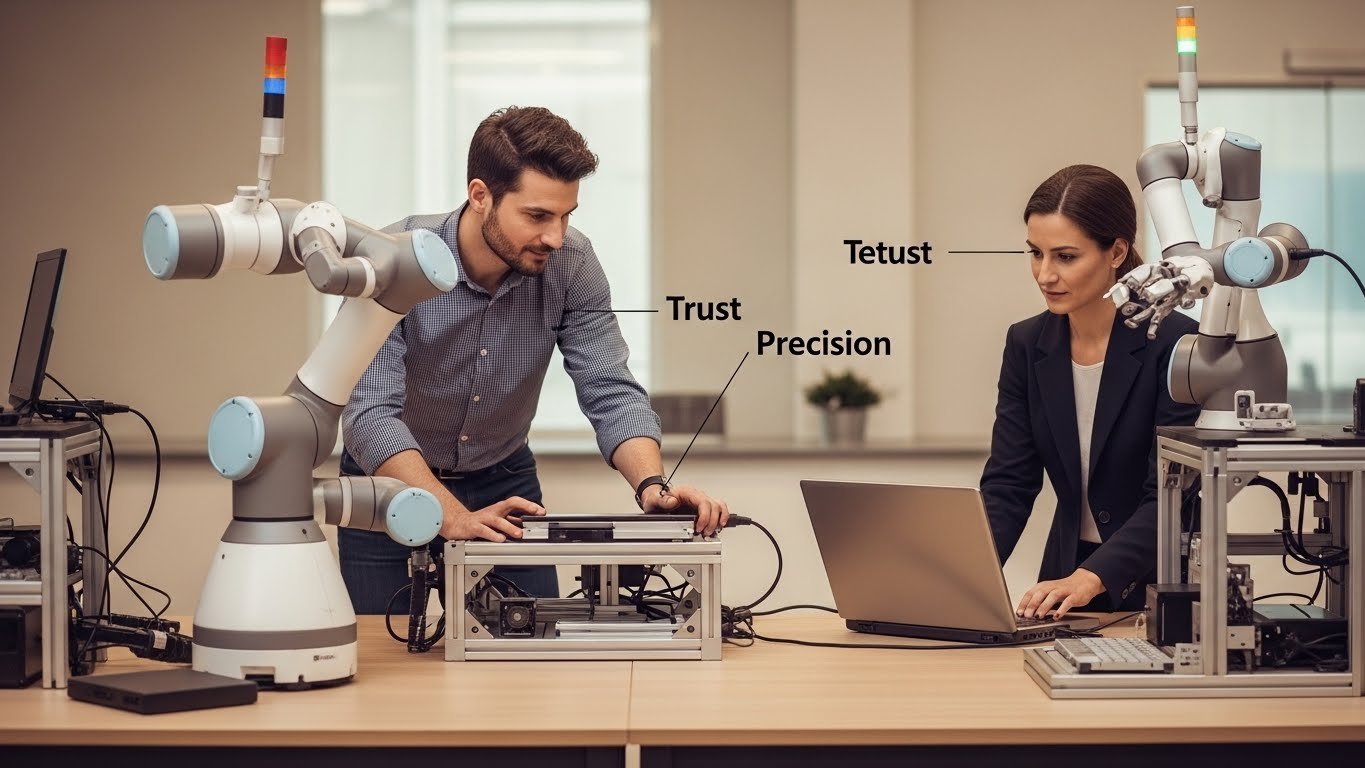
Collaborative robots, or cobots, are designed to work safely alongside humans. They share workspaces, adapt to human movements, and lower the barrier to automation in smaller organisations.

At the frontier are humanoid and general-purpose robots. While still experimental, these systems aim to operate in human environments using human tools—walking, grasping, and interacting in familiar ways.

The appeal of human-like form is not aesthetic. It is practical. Most environments—from offices to kitchens—are designed for human bodies. Robots that can navigate those spaces naturally may unlock entirely new applications.

This convergence of robotics and AI—often described as “physical AI”—marks a shift from machines that execute instructions to systems that perceive, reason, and act in the physical world. AI-powered robotics systems are accelerating this transition, enabling machines to adapt, learn, and operate in dynamic, non-industrial environments.

Economics, work, and ethics

Robotics does not simply replace jobs—it reshapes tasks.

In many settings, robots take over repetitive or hazardous elements of work, while humans move toward supervision, coordination, and judgment-based roles. New business models, such as Robotics-as-a-Service, are lowering adoption barriers by turning capital investments into operating expenses.

At the same time, ethical questions grow louder. Who is accountable when a robot makes a mistake? How is privacy protected in public and private spaces? What standards ensure safety and trust?

As robots become more visible, these questions will move from policy discussions to boardroom agendas.

Return to the hospital corridor a decade from now, and the robot delivering supplies may barely register. It will be part of the background—like elevators, Wi-Fi, or electricity.

That is the real story.

Robotics is no longer a niche manufacturing tool. It is becoming part of everyday infrastructure, woven quietly into how societies function. The future will not be defined by whether robots exist around us—but by how seamlessly we learn to live and work alongside them. For industry leaders, this shift represents not just technological adoption, but a fundamental operating model redesign driven by robotics value chain expansion.

Editorial Team

Editorial Team