Shaping a Borderless Future in Education : Prof. (Dr.) Bikash Sharma
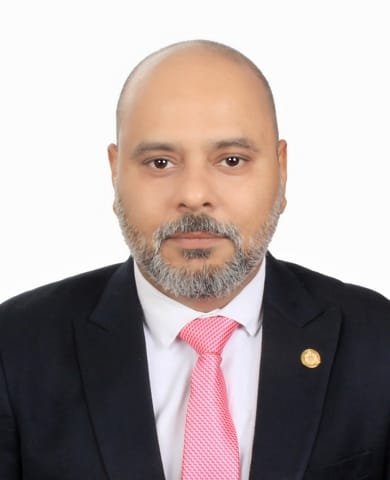
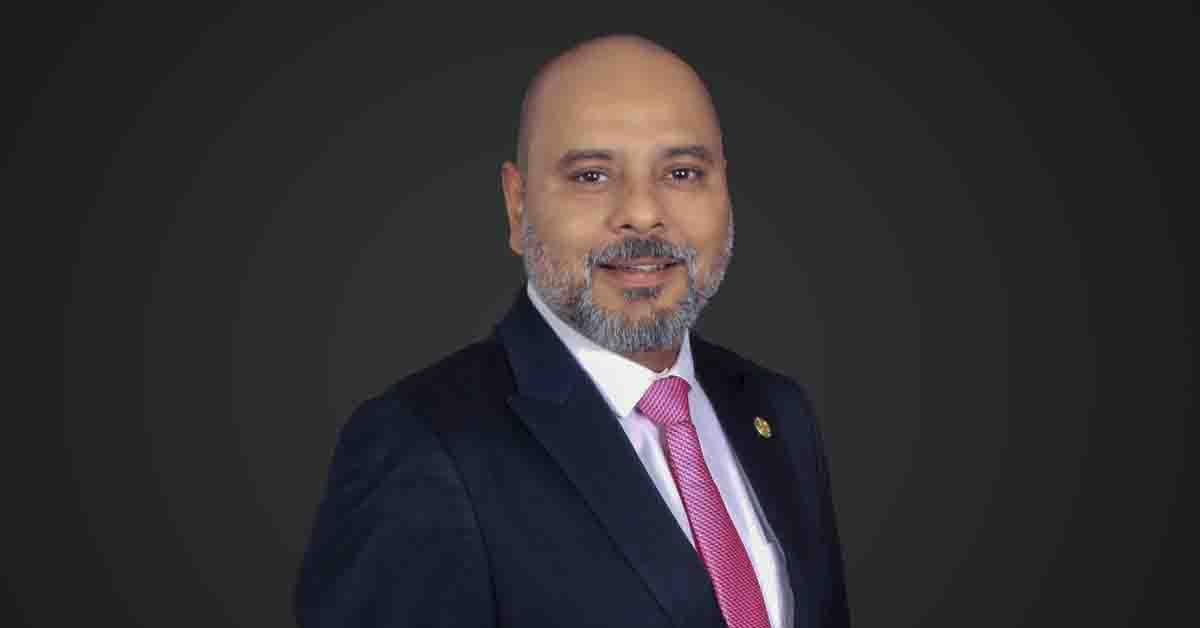
In an era defined by global education collaboration and accelerating digital transformation in higher education, few leaders have built cross-border academic ecosystems with the consistency and scale of Prof. (Dr.) Bikash Sharma. His work spans continents, regulatory environments, and institutional contexts—yet remains anchored in a singular conviction: education is not merely an industry, but a strategic catalyst for economic mobility, institutional development, and global employability.
Over two decades, Dr. Sharma has helped shape transnational education frameworks that bridge industry needs with academic design, elevate quality assurance standards, and make international education accessible across emerging and developing economies.
Prof. Dr. Bikash Sharma is a management professional with extensive experience across Education, Human Resources, Management, and IT Enabled Services. As President and Founder Trustee of the International Academic and Management Association (IAMA), established in 2013, he has built a global academic network operating across 47 countries and supporting nearly 200 institutions worldwide.
He also serves as CEO of iDeliver Services, founded in 2005, and sits on advisory boards of multiple universities across Africa, Europe, and Asia. Recognised globally for his contributions to higher education strategy and institutional development, Dr. Sharma has received numerous national and international honours and is featured in the Socrates Almanac global digest.
For this special feature, Global Excellence Digest sat down with Dr. Sharma for a candid conversation on leadership, internationalisation, and the evolving architecture of global higher education.
Building a Global Education Collaboration Model Across 47 Countries
Q. You have successfully built IAMA into a global academic network operating across 47 countries. What inspired you to establish IAMA, and what vision guided you at the very beginning?
A: IAMA was initially established to bridge the persistent gap between industry and academia. Early in my corporate career, I observed a structural disconnect between curriculum design and workforce requirements. While industry frequently highlighted employability gaps, there was no institutional platform for structured dialogue or curriculum co-creation.
Our model introduced a formal industry–academia collaboration framework. Corporate leaders from sectors such as banking, retail, and KPO engaged directly with educational institutions. Curriculum design was industry-vetted, skill-aligned, and supported by hiring assurances at defined pay grades.
The model first proved successful in India, but its scalability potential became clear. In our second phase, we expanded toward internationalisation of education, focusing particularly on under-developed and developing economies where quality benchmarks and affordability constraints limited global exposure.
Through strategic academic alliances, partnerships with regulatory bodies, and collaboration with globally aligned institutions in the US, UK, France, Germany, Canada, Malaysia, Japan, and South Korea, we began implementing international quality frameworks locally.
Today, this cross-border academic partnership model operates across Africa, Asia, and Latin America—strengthening institutional scalability while preserving local statutory compliance.
Transnational Education and the Future of Cross-Border Collaboration
Q: IAMA’s model connects institutions, students, and regulators worldwide. How do you envision the future of global education collaboration in an increasingly fragmented world?
A: The global pandemic accelerated the normalisation of online education, especially in regions where it was previously resisted. What began as emergency adaptation evolved into acceptance of digital-first higher education models.
We are now witnessing the rise of transnational education (TNE) frameworks where universities deliver programmes across borders through collaborative structures rather than physical expansion alone.
Emerging developments include:
- AR/VR-enabled immersive learning environments
- AI and Big Data-driven student capability mapping
- Skill-focused universities
- Micro-credentials aligned with workforce needs
- Industry-integrated certification pathways
Global education collaboration will increasingly depend on technology-enabled academic mobility, credit transfer systems, and dual degree structures that align with global employability frameworks.
Quality Assurance in Global Education Ecosystems
Q: Given the diversity of education systems across continents, how does IAMA approach quality assurance while respecting local contexts?
A: Cross-border education demands calibrated quality assurance systems. We partner with globally recognised accreditation bodies to implement international standards across academic delivery, institutional infrastructure, faculty accreditation, and courseware design.
While statutory regulatory requirements remain country-specific, operational and academic benchmarks are harmonised using international quality assurance in education. This creates consistency without erasing contextual diversity.
The objective is not homogenisation—but interoperability across education ecosystems.
Technology, AI and Institutional Scalability
Q: How do you see digital transformation shaping the accessibility and quality of higher education in the coming decade?
A: Technology is fundamentally redefining higher education delivery. What began as video-based instruction has evolved into AI-powered higher education models capable of personalising learning pathways at scale.
Institutions are:
- Using AI to generate adaptive lesson planning
- Leveraging Big Data for student performance analytics
- Deploying AR/VR for medical and technical education
- Building AI-backed educator assessment systems
We are entering a phase where mass accessibility and customisation will coexist. The “one-size-fits-all” model is being replaced by learner-centric architecture.
This shift will significantly expand access in education reform in emerging economies while strengthening global employability outcomes.
Leadership Across Diversified Domains
Q: As someone who leads both IAMA and iDeliver Services, what management philosophies sustain excellence across such different domains?
A: While education and IT-enabled services appear distinct, the underlying principles of quality management, internationalisation, and people-centric leadership remain consistent.
We operate with a flat organisational structure, minimal hierarchical layers, and delegated authority within strategic business units. Stakeholder participation and profit-sharing mechanisms have helped sustain institutional stability and low attrition over more than a decade.
Leadership, for us, is decentralised accountability aligned with strategic vision.
Academic Advisory and Global Institutional Footprint
Q: What best practices help emerging institutions strengthen their global footprint?
A: Institutions seeking global academic expansion must focus on three pillars:
- Uniform quality standards aligned with international benchmarks
- Strategic academic collaborations including credit transfer, dual degrees, and faculty exchange
- Workforce-integrated curriculum models
Cross-border collaboration is no longer optional—it is central to institutional relevance.
Ethics, Compassion and Organisational Culture
Q: How do compassion and ethics influence your leadership philosophy?
A: “Live and Let Live” has been my guiding philosophy. Organisational growth cannot come at the expense of human dignity. Compassion, whether toward colleagues or communities, shapes institutional culture.
At IAMA, we do not leave people behind. Collective progress defines success.
Lessons for Education Entrepreneurs
Q: What defining challenges shaped your journey, and what lessons would you share with aspiring education leaders?
A: Early rejection is common when introducing innovative education models. The key is conviction. Doubt often undermines ventures before market resistance does.
Entrepreneurs in education must believe in the structural value of what they are building. Institutions endure when purpose outweighs uncertainty.
The Next Decade: AI-Backed Global Education Expansion
Q: What’s next for IAMA and for you personally?
A: We remain committed to expanding global education collaboration through innovation. Upcoming initiatives include:
- AI-backed Educator Assessment and Accreditation
- Job-Oriented Programs in collaboration with Microsoft
- Microsoft-backed Train the Trainer initiatives
- Launch of a Medical University in Mauritius (2026)
The next decade will be defined by scalable, technology-enabled, globally integrated education ecosystems.
As Robert Frost wrote, “Miles to go before I sleep.” That remains both philosophy and responsibility.