
From AI Ethics to Enterprise Advantage: Lessons from Leading Organisations

As artificial intelligence reshapes industries worldwide, the organisations that will lead are those that treat responsible AI not as a compliance burden, but as a competitive edge built into every layer of their strategy. The conversation around responsible AI has long been framed defensively as a checklist of risks to mitigate, regulations to comply with, and PR crises to avoid. But this framing is not only incomplete; it is strategically backward. The organisations poised to dominate the next decade of artificial intelligence will not be those that treat AI ethics as a filter at the end of a pipeline. They will be the ones that embed ethical reasoning into the foundation of their AI governance framework from day one.
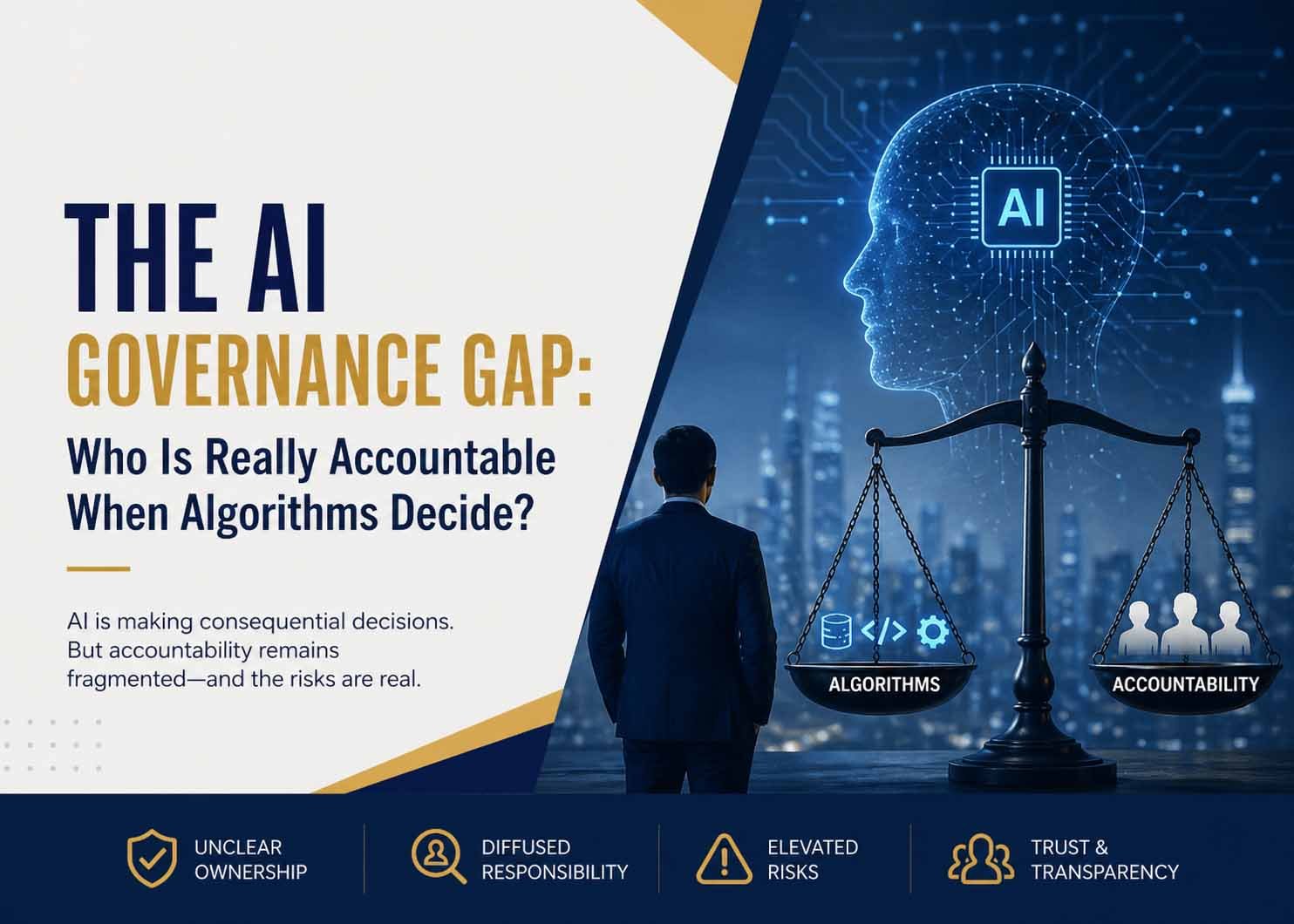
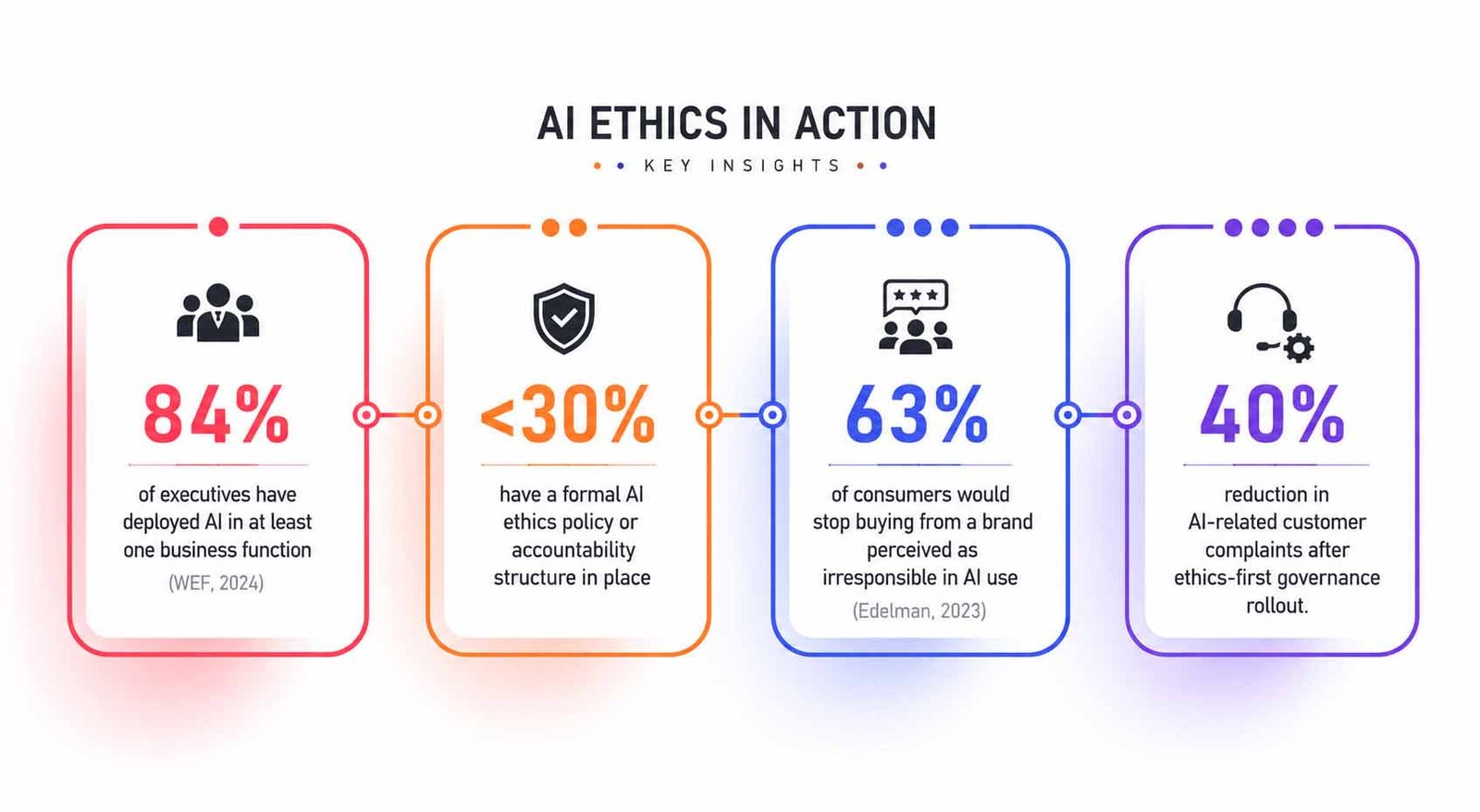
In a 2024 survey by the World Economic Forum, 84% of executives said their organisations had deployed AI in at least one business function yet fewer than 30% reported having a formal AI ethics policy or accountability structure in place. The gap between deployment and governance is not merely a reputational vulnerability. It is a strategic liability.
"Ethical AI is not the price you pay for permission to innovate. It is the architecture that makes innovation sustainable."
Why Responsible AI Is a Strategic Imperative, Not a Constraint
Consider the business case through three lenses: trust, talent, and longevity. Consumers increasingly make purchasing decisions based on corporate values. A 2023 Edelman Trust Barometer found that 63% of consumers worldwide would stop buying from a brand they perceived as irresponsible in its use of AI. Trust is not soft capital, it is measurable, monetisable, and destroyable.
On the talent side, the engineers, data scientists, and product leaders who build the world's most consequential AI systems increasingly demand to know that their work will be used responsibly. In a tight global market for AI talent, an organisation's public commitment to ethical AI principles can be the differentiating factor in a hiring decision.
Finally, consider longevity. Regulatory frameworks from the EU AI Act to Brazil's LGPD to emerging standards in Southeast Asia are converging rapidly toward mandatory AI accountability requirements. Organisations that embed governance structures now are not just ahead of compliance curves; they are building institutional muscle memory that late movers will struggle to replicate.
A Framework for Responsible AI: Five Pillars That Drive Performance
What does an actionable responsible AI framework actually look like? Drawing on practices from leading technology organisations, research institutions, and regulatory bodies, we identify five pillars that distinguish performative ethics from structural ethics.
Explainability by Design: The First Pillar of an AI Ethics Framework
Build interpretability into model architecture before deployment, not retrofitted after. Systems that cannot explain their outputs cannot be audited, improved, or trusted at scale.
Algorithmic Bias Auditing as Standard Practice in Responsible AI
Continuous algorithmic fairness testing not one-time pre-launch reviews to ensure AI systems do not perpetuate or amplify structural inequalities across gender, race, socioeconomic status, or geography.
Human Oversight Protocols for Accountable AI Governance
Defined escalation paths and human-in-the-loop checkpoints for high-stakes automated decisions in hiring, credit, healthcare, and criminal justice contexts in particular.
Data Sovereignty and Privacy Architecture Under the EU AI Act
Data governance structures that respect individual rights, enforce consent mechanisms, and meet international standards including GDPR, CCPA, and the EU AI Act's data quality provisions.
Ethics Leadership Infrastructure: Building AI Accountability at the Top
Dedicated roles Chief AI Ethics Officers, cross-functional ethics boards, and external advisory panels with real authority to pause, redirect, or veto AI initiatives.
How Leading Organisations Are Getting Responsible AI Governance Right
The conversation around responsible AI often becomes trapped in theory. Organisations publish ethical principles, establish governance committees, and issue public commitments to fairness, transparency, and accountability. Yet the true test of responsible AI is not what appears in a policy document—it is what happens when those principles are applied to real-world decisions involving customers, employees, patients, citizens, and communities.
The most mature organisations have recognised that responsible AI governance is not a parallel initiative operating alongside innovation. It is an operational discipline embedded directly into product development, procurement, risk management, data governance, and executive decision-making. Rather than viewing ethics as a final checkpoint before deployment, these organisations integrate ethical considerations throughout the entire AI lifecycle—from data collection and model design to monitoring, auditing, and post-deployment oversight.
What distinguishes these organisations is not simply that they have governance frameworks in place. It is that they have transformed responsible AI from a compliance exercise into a strategic capability. Their governance mechanisms actively improve model performance, strengthen stakeholder trust, reduce operational risk, and create more resilient systems capable of adapting to evolving regulatory expectations.
Across sectors such as healthcare, financial services, technology, and public administration, a consistent pattern is emerging. Organisations that invest early in transparency, fairness, accountability, and human oversight are discovering that responsible AI governance delivers measurable business value. In many cases, the governance process itself uncovers hidden data quality issues, mitigates algorithmic bias, improves decision accuracy, and accelerates stakeholder adoption.
The following examples illustrate how leading institutions are translating responsible AI principles into operational practice—and why governance is increasingly becoming a defining characteristic of successful AI leadership rather than a constraint on innovation.
Healthcare AI: Responsible AI Governance in High-Stakes Clinical Settings
When a major UK National Health Service trust deployed an AI triage tool in 2023, it paired the rollout with a dedicated ethics review board comprising clinicians, patient advocates, and independent technologists. Before any model went live, it was subjected to adversarial fairness testing across demographic subgroups. The result: not only was the system adopted more smoothly with staff resistance lower than in comparable deployments but diagnostic accuracy improved because the ethics review process surfaced data quality gaps that engineers had missed.
Financial Services: AI Risk Management and Algorithmic Accountability in Practice
A leading European bank integrated algorithmic accountability requirements into its vendor contracts, mandating that any third-party AI system used in credit decisioning must pass bias audits and provide explainability logs. Within two years, the bank reported a 40% reduction in customer complaints related to AI-driven decisions and a measurable improvement in loan approval rates for historically underserved communities.
The Cost of Getting AI Ethics and Algorithmic Bias Wrong
The counterexamples are instructive. Amazon's experimental AI hiring tool, trained on a decade of historical CVs that skewed male, began systematically downgrading applications from women and was scrapped in 2018 only after internal discovery. The reputational damage was not the worst cost; the real loss was the years of talent pipeline contaminated by a biased system.
More recently, generative AI tools deployed without adequate safeguards have produced discriminatory outputs in healthcare screening, biased risk scores in criminal justice, and privacy violations in consumer applications. Each case shares a common root: the ethics question was asked after the system was built, not while it was being architected.
The lesson for leadership is clear: AI risk management cannot be an afterthought. Every day a governance gap exists is a day of compounding structural exposure — regulatory, reputational, and financial.
Embedding Ethical AI Principles Into Organisational Culture
Frameworks alone do not create ethical organisations. Culture does. The most resilient organisations are those where every team member, not just a dedicated ethics function understands what responsible AI deployment means in their context.
This requires rethinking how AI literacy is distributed inside institutions. It means building AI governance vocabulary into onboarding, performance reviews, and product development rituals. It means creating psychological safety for engineers and product managers to raise ethical concerns without fear of slowing a roadmap. And it means rewarding the decision to not build something when the ethical case isn't clear.
As the OECD's Principles on Artificial Intelligence emphasise, trustworthy AI must be human-centred not as a constraint on capability, but as the condition that makes capability worth having.
What Responsible AI Leadership Looks Like in 2026
The frontier has shifted. In 2020, responsible AI was largely about preventing harm. In 2026, the leading edge is using ethical AI practices as a source of differentiated value building systems that are not just safer, but more accurate, more inclusive, and more trusted by the people they serve.
Organisations that lead this decade will treat their AI ethics strategy the way they treat their most valuable intellectual property: as something that took years to build, that competitors cannot easily copy, and that compounds in value the more consistently it is applied.
The question for every executive, product leader, and board member is no longer "how do we manage the risks of AI?" It is: "how do we build the kind of organisation that earns the right to use AI at full scale and keeps earning it, every day?"
FAQ: People Also Ask
What is a responsible AI framework?
A responsible AI framework is a structured set of principles, processes, and governance mechanisms that organisations use to ensure their AI systems are transparent, fair, accountable, and aligned with human values throughout the design, development, and deployment lifecycle.
Why is AI ethics important for business strategy?
AI ethics directly impacts consumer trust, regulatory compliance, talent acquisition, and long-term brand value. Organisations that embed ethical AI principles into strategy — rather than treating them as a compliance add-on — gain competitive advantages that are difficult for late movers to replicate.
How does algorithmic bias affect organisations?
Algorithmic bias can lead to discriminatory outcomes in high-stakes decisions, including hiring, lending, and healthcare. Beyond the ethical harm to individuals, organisations face regulatory penalties, reputational damage, and legal liability — particularly under frameworks such as the EU AI Act.