
The Quiet Return of Global Mobility: Why Cross-Border Assignments Are Back on the Table

For several years, the obituary for the international assignment was written confidently. Remote work, rising costs and travel disruption, the argument ran, would make sending people abroad a relic. The evidence now tells a quieter and more interesting story. International assignments did not vanish. They changed shape, shrank in some places, grew in others and returned to the agenda of many leadership teams. This article examines global mobility trends 2026, what the surveys can and cannot tell us, and what employers and professionals should do next.
What the Surveys Suggest
Several recent studies point in the same direction, though readers should remember that most are produced by organisations that sell mobility services.
The consultancy WTW reported in December 2025, from its Global Mobility and Expatriate Benefits Survey, that over 80 per cent of employers planned to maintain or increase their number of international assignees over the following twelve months. It also found that 84 per cent still rely on long-term assignments of a year or more, while short-term, commuter and globally remote arrangements are gaining traction.
Cartus, a relocation provider, reported in March 2026 that two-thirds of companies with cross-border moves expected stable or increased relocation volume in 2026. Among the activities respondents anticipated most were business travel, at 73 per cent, followed by international short-term assignments, at 66 per cent.
These figures describe intentions, not outcomes, and neither study suggests a boom. The right description is a quiet return: steady, selective and more varied than before.
Why Employers Are Reconsidering
Four forces help explain the shift.
Remote work has limits. Distributed teams can deliver tasks, but building trust, transferring tacit knowledge and developing future leaders often benefit from time spent in another market. Our guide to remote work best practices shows what distributed teams do well, and where deliberate effort is needed.
Skills are scarce and unevenly spread. When the talent a company needs sits in a different country, moving people can be quicker than recruiting locally.
Leadership development. A well-designed assignment exposes rising leaders to different markets, regulators and cultures. Few classroom programmes can replicate that.
Customer and market access. Some relationships and opportunities require a physical presence.
None of these drivers is new, but together they explain why mobility is returning as a considered choice rather than a default. Leaders who once asked whether remote work could replace assignments are now asking a better question: which work genuinely benefits from presence, and which does not? That distinction, applied honestly, is what separates purposeful mobility from expensive habit.
A New Shape: The Mobility Mix
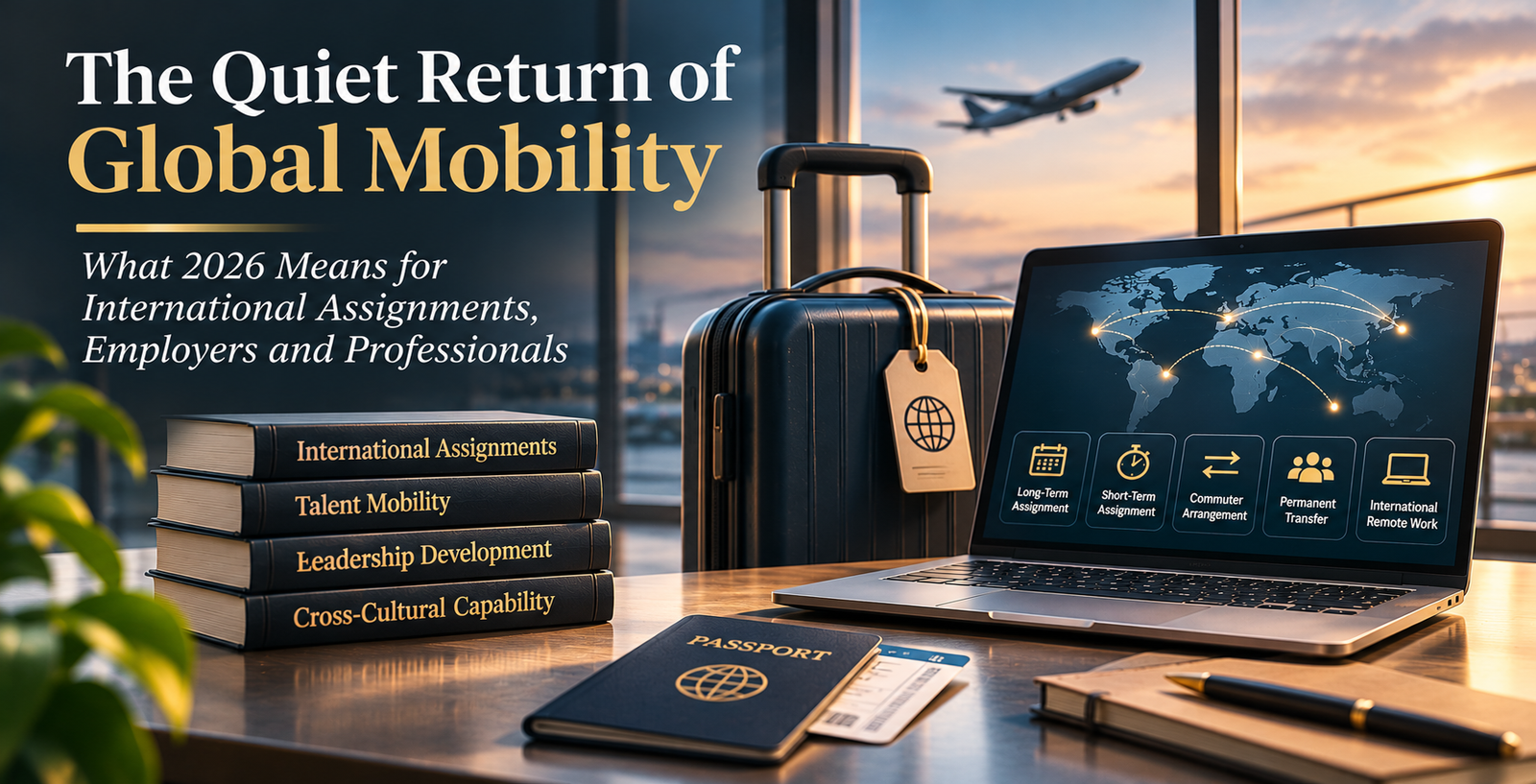
Assignments today come in more forms than the traditional multi-year posting.
Long-term assignment. A year or more, typically for senior or specialist roles.
Short-term assignment. Weeks or months, often project-based.
Commuter arrangement. Regular travel between home and host locations.
Permanent transfer. A move with no planned return.
International remote work. An employee works for a foreign employer or team from their own country, or from a third location.
The sensible approach is to match the form to the purpose. A short project does not need a full relocation package. A long-term capability build probably does.
The Obstacles Are Real
Honest planning must account for friction.
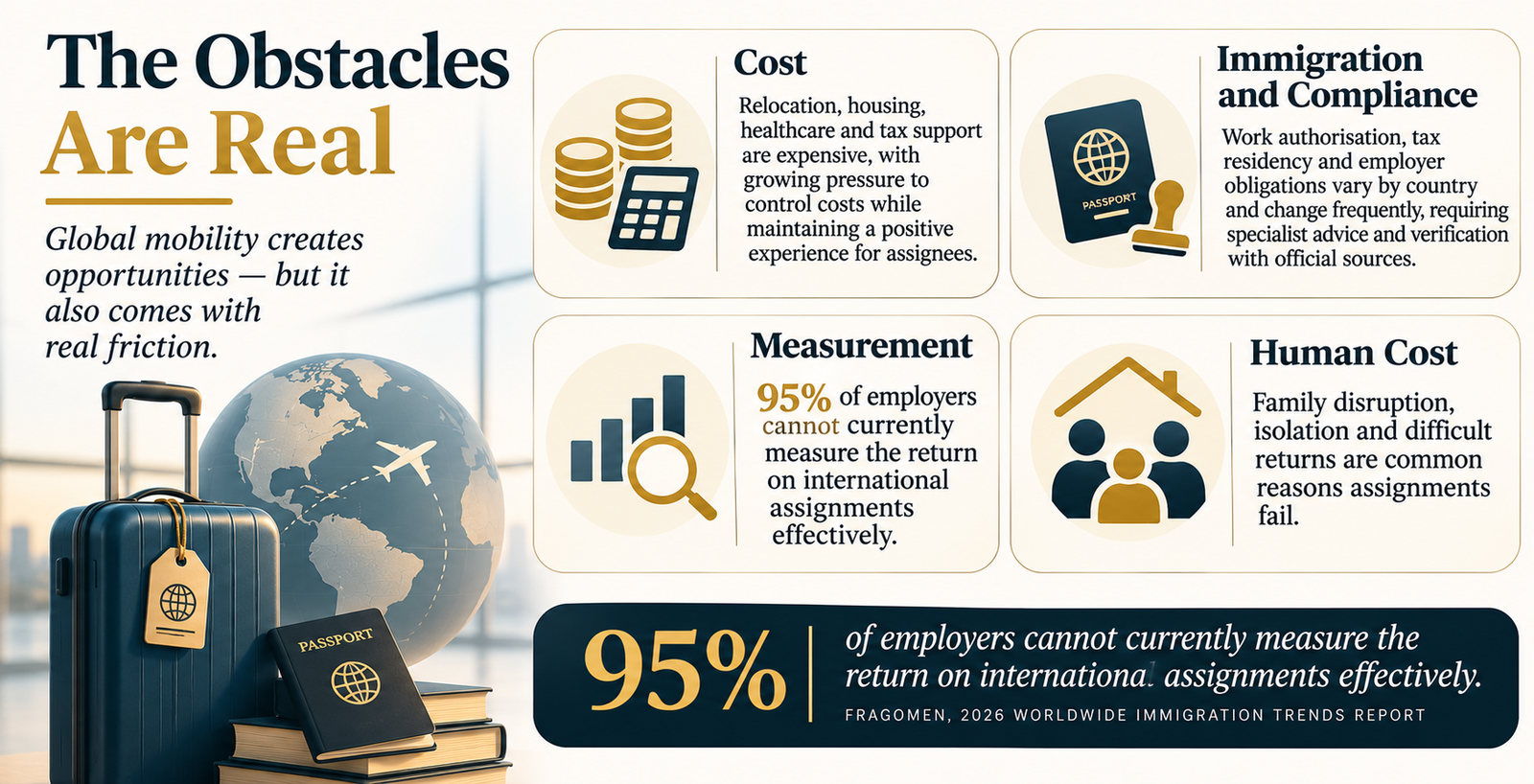
Cost. Relocation, housing, healthcare and tax support are expensive, and WTW noted growing tension between cost control and the experience offered to assignees.
Immigration and compliance. Work authorisation, tax residency and employer obligations vary by country and change frequently. Employers should seek specialist legal and tax advice and employees should verify requirements with official sources before committing.
Measurement. Fragomen's 2026 Worldwide Immigration Trends Report, as summarised by Plus, found that 95 per cent of employers cannot currently measure the return on international assignments effectively. That is a notable gap. If a company cannot show what an assignment achieves, it will struggle to defend the budget when times are tight.
Human cost. Family disruption, isolation and difficult returns are common reasons assignments fail.
Mobility as a Learning Pathway
There is a wider lesson here for anyone who thinks about learning and development. Living and working in another market is among the most powerful forms of experiential learning available. It builds judgement, cultural fluency and resilience in ways that courses rarely match. Employers that design assignments with explicit learning goals, mentoring and structured reflection tend to extract more value than those that treat them as a staffing fix. Professionals, in turn, should record what they learn, because that evidence strengthens the next career move and gives the organisation a reason to use their new capabilities on return.
Advice for Professionals
If you want an international assignment, treat it as a project you must sell. Identify a business need in the host location, explain how your skills address it and propose a measurable outcome. Show that you have considered cost and practicalities. Our analysis of career transition in a changing global economy offers a wider view of how to position yourself when markets and roles are shifting.
Prepare for the human side. Cross-cultural effectiveness depends less on technical skill than on adaptability, curiosity and composure, qualities that appear in our review of emotional intelligence in uncertain times. Look after your wellbeing as well. Time-zone fatigue and distance from support networks are real, and our piece on digital wellness offers practical routines for staying healthy while working across borders.
For those considering a later-career move abroad, career reinvention after 40 explains how to build a credible case.
Mobility as a Strategic Choice
The quiet return of global mobility is not a story of nostalgia for the expatriate packages of the past. It is a story of selective, purposeful movement, supported by better design and, ideally, better measurement. Employers that treat assignments as strategic investments with clear aims will gain a durable advantage. Professionals who approach them with preparation and a business case will find more doors open than the conventional wisdom suggests.
Frequently Asked Questions
Are international assignments making a comeback?
Surveys suggest they are holding steady or growing modestly. WTW found over 80 per cent of employers planned to maintain or increase assignees, and Cartus found two-thirds of companies expected stable or higher volume. Both sources have commercial interests, and the figures reflect intentions.
What types of international assignment are most common now?
Long-term assignments remain widely used, but short-term, commuter, permanent transfer and international remote arrangements are growing in importance. The best choice depends on the purpose of the move.
Why do employers struggle to prove the value of assignments?
A 2026 Fragomen report, as summarised by Plus, found 95 per cent of employers cannot measure assignment return effectively. Many have not defined success indicators or tracked outcomes such as retention after return.
What should I check before accepting an international assignment?
Confirm work authorisation, tax and social security arrangements, healthcare, family support and your return role. Use official government sources and seek qualified legal or tax advice, because rules vary by country.